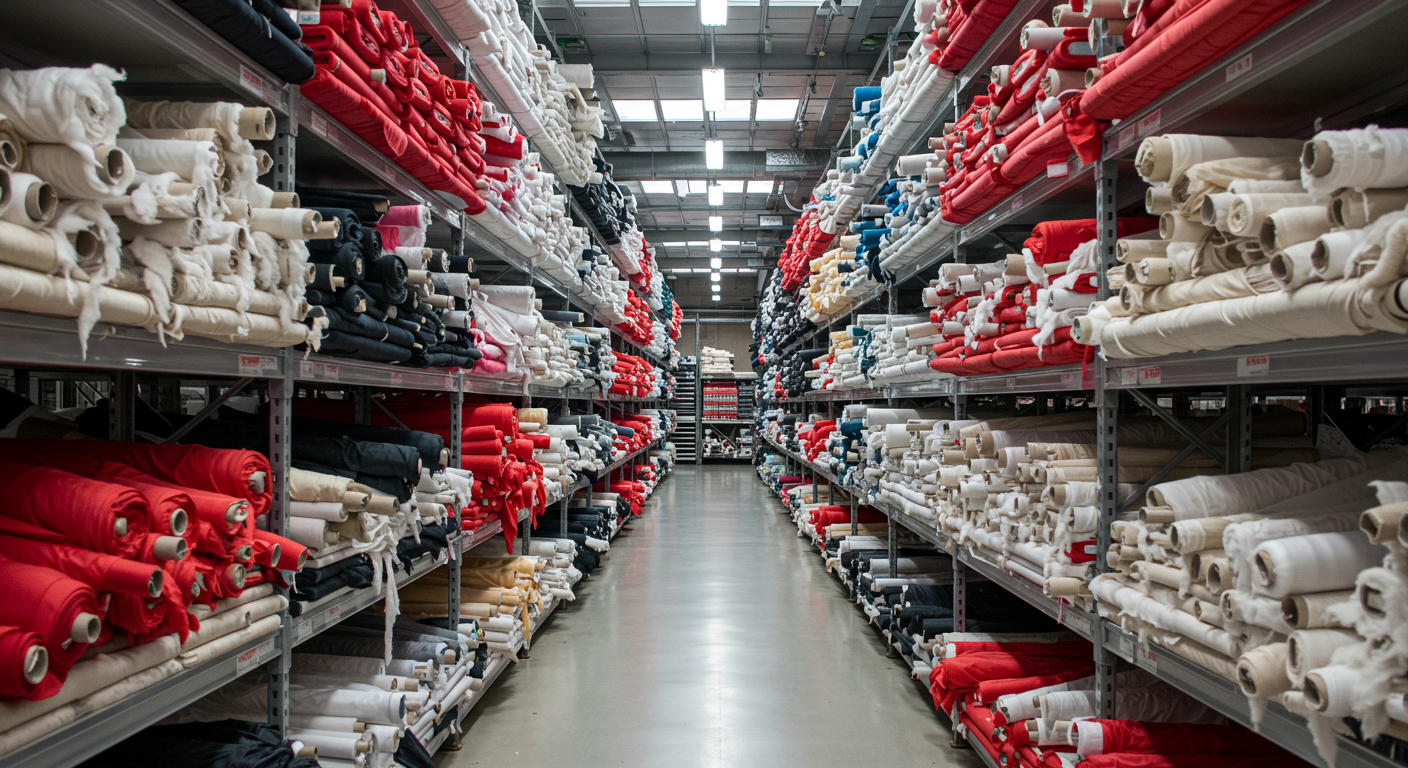
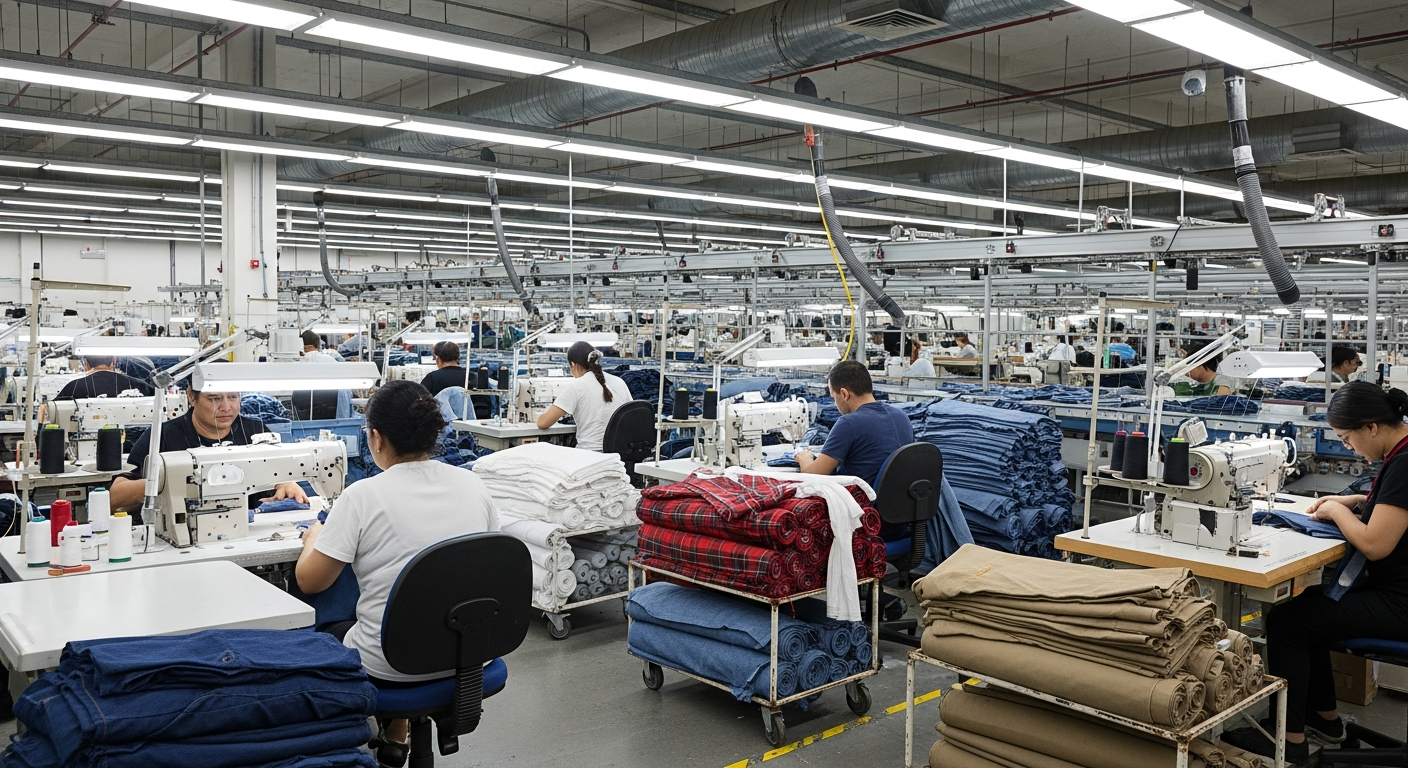
The textile industry is one of the sectors where contract manufacturing is most widely used worldwide. Manufacturing services can be obtained at many stages from fabric production to garment making.
Types of Textile Contract Manufacturing
CMT (Cut-Make-Trim)
The most common model. The ordering company provides fabric and accessories while the manufacturer handles cutting, sewing, and finishing.
FOB (Free On Board)
Full contract manufacturing model where the manufacturer handles the entire process including fabric and accessory procurement.
ODM (Original Design Manufacturing)
The manufacturer produces with their own designs, and the ordering company sells under their own brand.
Manufacturing Process
- Design and pattern making
- Fabric and accessory selection
- Sample production and approval
- Fabric cutting
- Sewing and assembly
- Washing and finishing
- Quality control
- Ironing and packaging
- Shipping

To find textile manufacturers, use the TR2B platform.
For more details, see Garment Contract Manufacturing and Quality Control in Textiles.
Textile Contract Manufacturing Guide: Supplier Decision Framework
The commercial value of Textile Contract Manufacturing Guide is not the definition itself. It is the way apparel brands, sourcing teams and textile suppliers can use FOB (Free On Board) to screen suppliers before time is spent on samples or negotiation.
The easiest way to weaken the decision is treating fabric choice, labeling and final inspection as separate topics instead of one release system. Use the article to turn that weak point into a checklist item with an owner.
Supplier Signals Worth Checking
| Evidence | Signal | Decision Use |
|---|---|---|
| fabric composition and care-label basis | defect rate by operation | Use this line to turn textile, manufacturing, guide from a keyword into a procurement control. |
| AQL or inspection plan | sample revision count | Use sample revision count to decide whether Textile Contract Manufacturing Guide is ready for supplier comparison. |
| restricted-substance test scope | fabric shrinkage tolerance | Connect restricted-substance test scope to fabric shrinkage tolerance before price becomes the main filter. |
| sample and size-set approval record | shipment inspection result | Ask who owns sample and size-set approval record and how shipment inspection result will be checked. |
From Reading to Supplier Action
The page earns its place when it turns broad research into one visible sourcing action.
- For Textile Contract Manufacturing, make this explicit: Confirm material identity before sampling.
- For Textile Contract Manufacturing, make this explicit: Tie inspection checkpoints to the buyer specification.
- For Textile Contract Manufacturing, make this explicit: Keep test reports and care-label logic in the same supplier file.
Textile Contract Manufacturing Guide: RFQ Translation
Treat Textile Contract Manufacturing Guide as RFQ preparation for Textile Contract Manufacturing. A buyer should leave the page with clearer questions, and a supplier should know which information must appear before quotation.
Textile Contract Manufacturing Guide: Supplier Decision Framework is the best place to convert reading into action: write the missing inputs, separate sample from volume order and make lead-time assumptions explicit.
| Control | How to use it |
|---|---|
| Scope | Define what Textile Contract Manufacturing Guide includes and excludes before supplier contact. |
| Proof | Ask which document, sample or record supports Textile Contract Manufacturing Guide: Supplier Decision Framework. |
| Timing | Separate first reply, sample review, pilot order and volume approval for Textile Contract Manufacturing Guide. |
| Owner | Assign one person to collect missing data and update the Textile Contract Manufacturing Guide file. |
Textile Contract Manufacturing Guide: final check
- Write the buyer or supplier objective for Textile Contract Manufacturing Guide in one paragraph.
- List the documents that would make Textile Contract Manufacturing Guide: Supplier Decision Framework verifiable.
- Compare price only after scope, evidence and timing are written.
- Keep the next action concrete: request data, approve sample, run pilot or stop.
Editorial quality checklist for Textile Contract Manufacturing
Textile Contract Manufacturing Guide EN guide should be used as a working decision file, not only as a reading page. The practical check is whether a buyer can leave the article with a clear scope, required evidence, supplier questions, risk owner and next action for Textile Contract Manufacturing.
For stronger SEO and buyer usefulness, this page now connects the topic to proof, implementation and related sourcing paths. That reduces thin-content risk and helps the reader move from general research to a verifiable supplier or operating decision.
- Define the decision: write product or service scope, target market, expected volume, approval owner and the date of the next review.
- Ask for current evidence: request documents that match this exact product, service, batch, process or customer scenario.
- Compare complete answers: score response quality, missing data, correction speed and commercial assumptions before comparing price.
- Keep the first order controlled: connect sample approval, release criteria, logistics, payment terms and corrective action in one note.
| Review area | Quality question |
|---|---|
| Scope | Product, market, volume, owner and release rule are written before supplier comparison. |
| Evidence | Specification, sample, quality record, certificate, label or service proof is checked for date and relevance. |
| Decision | The buyer records what can be approved now, what is blocked and who owns the next correction. |
FAQ for this article
What should be checked first for Textile Contract Manufacturing?
Start with the decision file: scope, evidence, acceptance criteria, delivery assumptions and the person who can approve or stop the next step.
How does this article support supplier or partner selection?
It turns the topic into a checklist of records, questions and comparison rules, so the reader can separate a strong answer from a generic sales reply.
When should the reader move to a related guide?
Move to a related guide when the next risk is outside the current page, such as supplier discovery, contract manufacturing, food safety, logistics or company verification.
Useful cross-site next reads
Read Before Moving Forward
Related checks for Textile Contract Manufacturing Guide: review these pages before supplier approval or production release.
- Garment Contract Manufacturing: CMT, MOQ and Quality Control
- Quality Control in Textile Manufacturing: AQL and Inspection Guide
- Fabric Selection and Sourcing for Contract Manufacturing
- How to Prepare a Manufacturing Contract
- Choosing the Right Contract Manufacturing Partner
- What is Contract Manufacturing? Complete Guide
- Contract Manufacturing: Advantages and Disadvantages
- Contract Manufacturing Processes: Step by Step Guide
Sources and Further Reading
Source check for Textile Contract Manufacturing Guide: official standards, regulator pages and sector references are listed below. Validate final legal, medical, food or export decisions against the current primary text.