Electronic Manufacturing Services (EMS) refers to the outsourcing of all manufacturing processes for electronic products, from design to assembly.
EMS Services
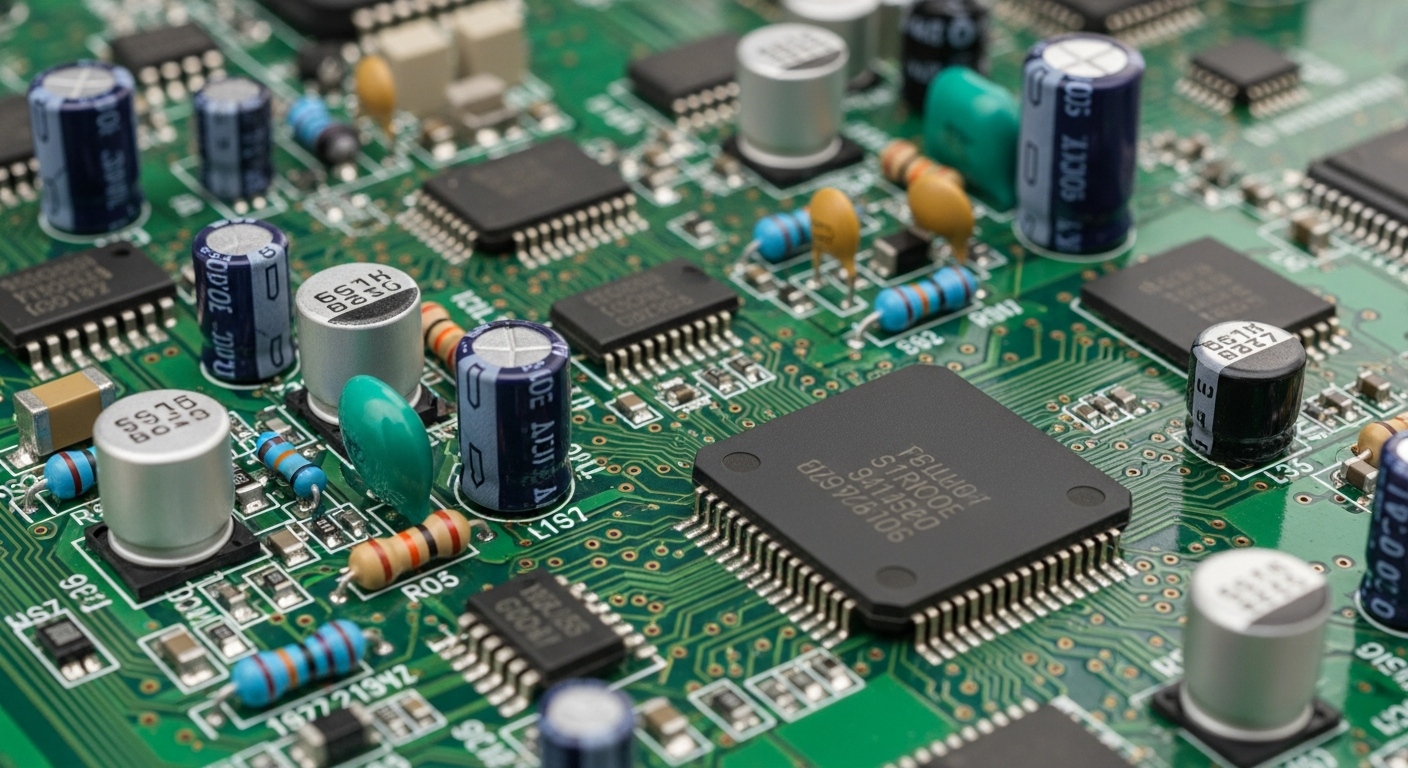
PCB Assembly (PCBA)
Soldering electronic components onto printed circuit boards using SMT and THT methods.
Box Build
Includes mounting circuit boards into enclosures, cabling, testing, and final product assembly.
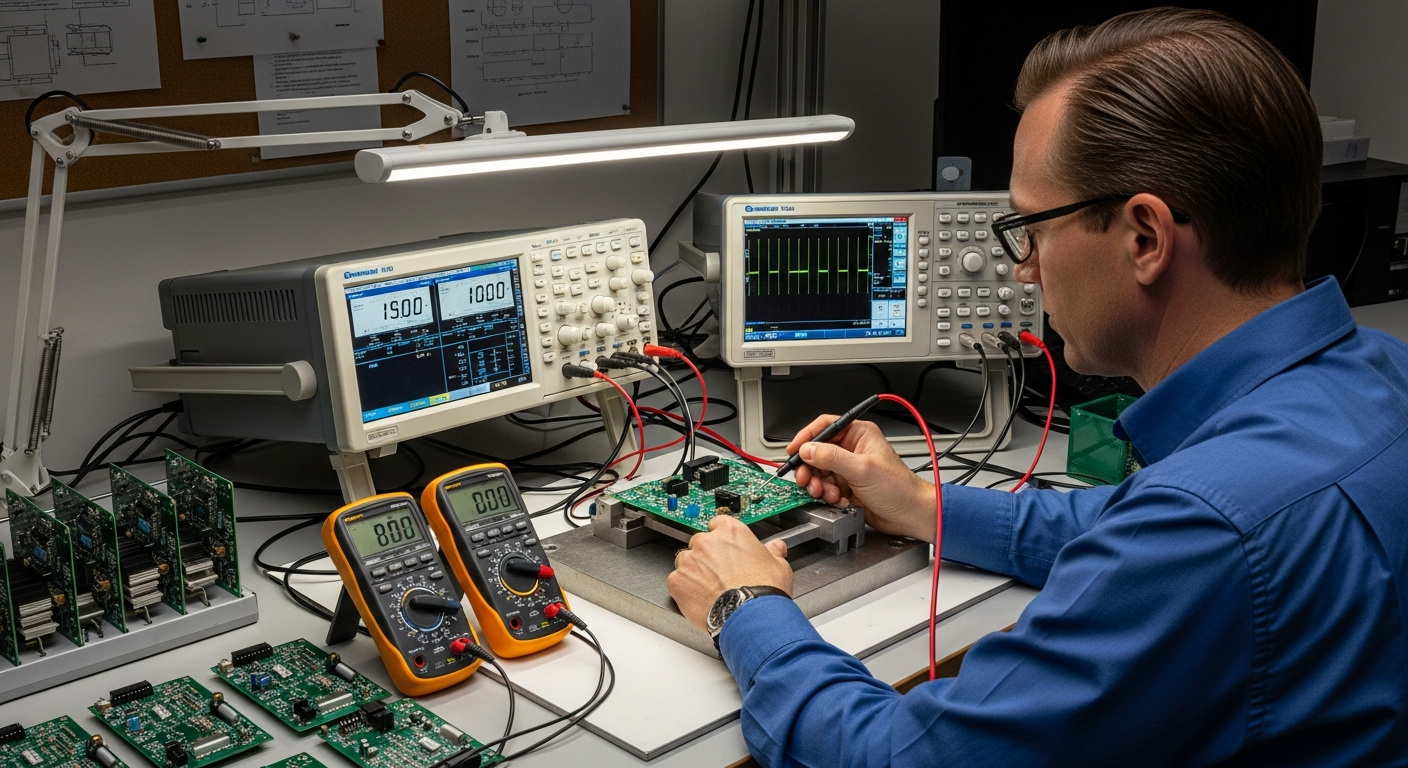
Testing and Quality Control
Comprehensive quality control including ICT (In-Circuit Test), functional testing, and aging tests.
The EMS Industry
The global EMS market is growing rapidly. Turkey has manufacturers specializing in defense, white goods, and consumer electronics.
Selection Criteria for EMS Providers
- Technical Capability: SMT lines, soldering technology, and test equipment
- Certifications: ISO 9001, ISO 13485 (medical), AS9100 (aerospace)
- Prototyping: Rapid prototyping capability
- Supply Chain: Component sourcing and inventory management
- NPI Process: New Product Introduction support
To find EMS providers in Turkey, use the TR2B platform.
See also Cosmetics Manufacturing and Manufacturing Processes.
Electronics Contract Manufacturing (EMS): PCB Assembly Supplier Guide: Supplier Decision Framework
Use Electronics Contract Manufacturing (EMS): PCB Assembly Supplier Guide as a short operating brief for Manufacturing Sectors. The useful output is a cleaner decision around The EMS Industry, with fewer assumptions hidden inside price comparison.
Do not let quoting assembly cost without knowing test depth, component risk and acceptance criteria become normal practice. A useful supplier review should show what is known, what is missing and what must be tested next.
Questions That Separate Proof from Claims
- BOM and revision control: Connect BOM and revision control to component lead-time risk before price becomes the main filter.
- IPC or workmanship criteria: Ask who owns IPC or workmanship criteria and how defect Pareto will be checked.
- ESD control evidence: If first-pass yield is weak, keep Electronics Contract Manufacturing (EMS): PCB Assembly Supplier Guide in clarification rather than approval.
- functional or in-circuit test coverage: Make functional or in-circuit test coverage visible in the file so the next buyer can audit the decision.
Shortlist Move to Make Next
The result should be a decision path that a colleague can repeat without rereading the whole article.
- Use The EMS Industry to test this action: Send controlled Gerber, BOM and assembly notes.
- Use The EMS Industry to test this action: Separate prototype assumptions from production assumptions.
- Use The EMS Industry to test this action: Ask for test evidence before approving ramp-up.
Electronics Contract Manufacturing (EMS): PCB Assembly Supplier Guide: Stop-Go Review
A strong review of Electronics Contract Manufacturing (EMS): PCB Assembly Supplier Guide includes a stop-go point. In Manufacturing Sectors, not every supplier conversation deserves a quote, sample or purchase order.
Use The EMS Industry to decide whether the project can move forward, needs extra proof, requires a pilot or should be declined before cost and timeline expectations harden.
| Control | How to use it |
|---|---|
| Scope | Define what Electronics Contract Manufacturing (EMS): PCB Assembly Supplier Guide includes and excludes before supplier contact. |
| Proof | Ask which document, sample or record supports The EMS Industry. |
| Timing | Separate first reply, sample review, pilot order and volume approval for Electronics Contract Manufacturing (EMS): PCB Assembly Supplier Guide. |
| Owner | Assign one person to collect missing data and update the Electronics Contract Manufacturing (EMS): PCB Assembly Supplier Guide file. |
Electronics Contract Manufacturing (EMS): PCB Assembly Supplier Guide: final check
- Write the buyer or supplier objective for Electronics Contract Manufacturing (EMS): PCB Assembly Supplier Guide in one paragraph.
- List the documents that would make The EMS Industry verifiable.
- Compare price only after scope, evidence and timing are written.
- Keep the next action concrete: request data, approve sample, run pilot or stop.
Editorial quality checklist for Manufacturing Sectors
Electronics Contract Manufacturing (EMS): PCB Assembly should be used as a working decision file, not only as a reading page. The practical check is whether a buyer can leave the article with a clear scope, required evidence, supplier questions, risk owner and next action for Manufacturing Sectors.
For stronger SEO and buyer usefulness, this page now connects the topic to proof, implementation and related sourcing paths. That reduces thin-content risk and helps the reader move from general research to a verifiable supplier or operating decision.
- Define the decision: write product or service scope, target market, expected volume, approval owner and the date of the next review.
- Ask for current evidence: request documents that match this exact product, service, batch, process or customer scenario.
- Compare complete answers: score response quality, missing data, correction speed and commercial assumptions before comparing price.
- Keep the first order controlled: connect sample approval, release criteria, logistics, payment terms and corrective action in one note.
| Review area | Quality question |
|---|---|
| Scope | Product, market, volume, owner and release rule are written before supplier comparison. |
| Evidence | Specification, sample, quality record, certificate, label or service proof is checked for date and relevance. |
| Decision | The buyer records what can be approved now, what is blocked and who owns the next correction. |
FAQ for this article
What should be checked first for Manufacturing Sectors?
Start with the decision file: scope, evidence, acceptance criteria, delivery assumptions and the person who can approve or stop the next step.
How does this article support supplier or partner selection?
It turns the topic into a checklist of records, questions and comparison rules, so the reader can separate a strong answer from a generic sales reply.
When should the reader move to a related guide?
Move to a related guide when the next risk is outside the current page, such as supplier discovery, contract manufacturing, food safety, logistics or company verification.
Useful cross-site next reads
Read Before Moving Forward
Related checks for Electronics Contract Manufacturing (EMS): PCB Assembly Supplier Guide: review these pages before supplier approval or production release.
- Food Contract Manufacturing: Private Label Supplier Selection
- Cosmetics Contract Manufacturing: GMP, MOQ and Supplier Selection
- Pharmaceutical and Medical Device Contract Manufacturing
- Contract Manufacturing Processes: Step by Step Guide
- Quality Management in Contract Manufacturing
- How to Prepare a Manufacturing Contract
- Choosing the Right Contract Manufacturing Partner
- What is Contract Manufacturing? Complete Guide
Sources and Further Reading
Source check for Electronics Contract Manufacturing (EMS): PCB Assembly Supplier Guide: official standards, regulator pages and sector references are listed below. Validate final legal, medical, food or export decisions against the current primary text.