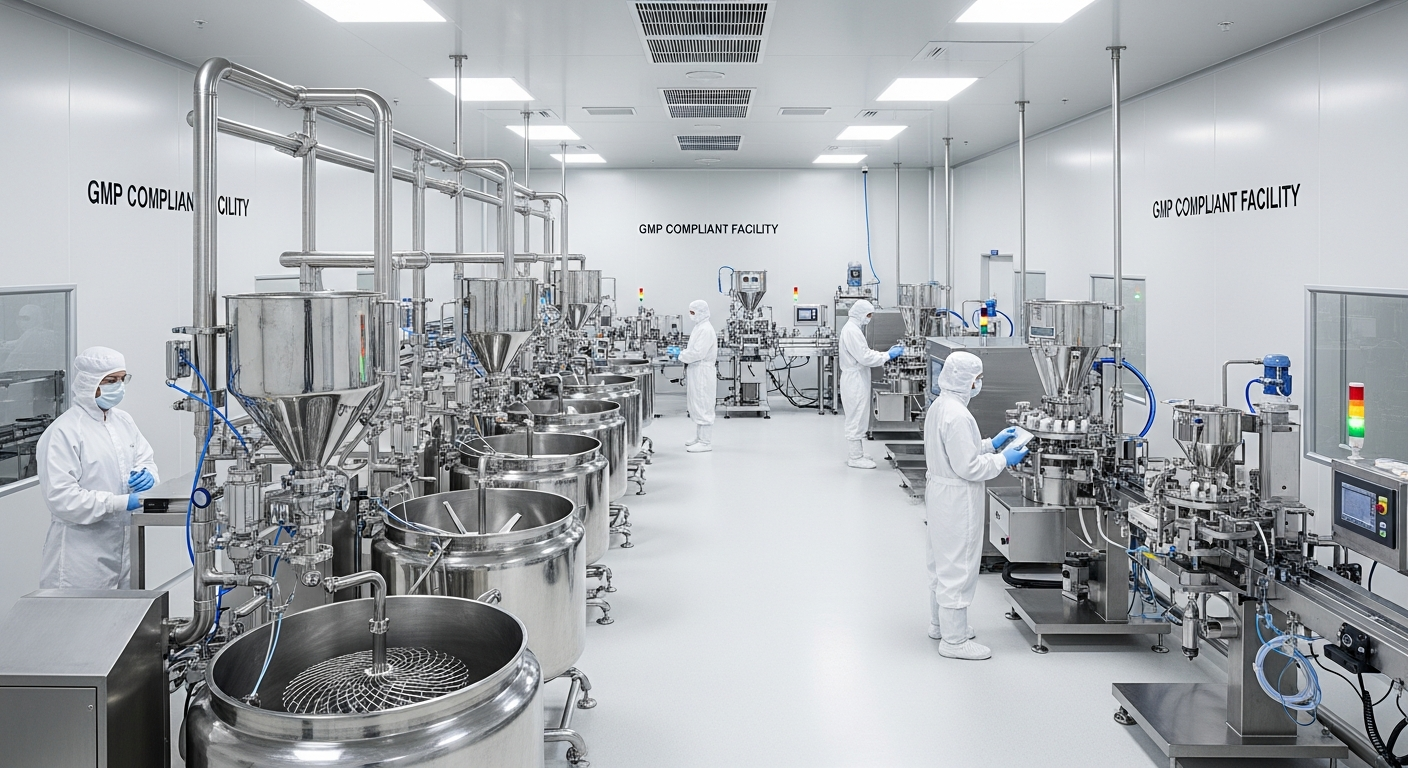
Pharmaceutical and medical device contract manufacturing is one of the most regulated and technically demanding sectors. The global pharmaceutical CDMO (Contract Development and Manufacturing Organization) market is growing rapidly as drug companies increasingly outsource production.
Types of Pharma Contract Manufacturing
API Manufacturing
Active Pharmaceutical Ingredient (API) manufacturing involves synthesizing the biologically active compound in a drug. Requires specialized chemistry expertise and strict GMP compliance.
Finished Dosage Form (FDF) Manufacturing
Production of final drug products: tablets, capsules, syrups, injections. The most common form of pharmaceutical contract manufacturing.
Medical Device Manufacturing
Contract manufacturing of Class I, II, and III medical devices. Turkey has growing capabilities in disposable medical products and surgical equipment.
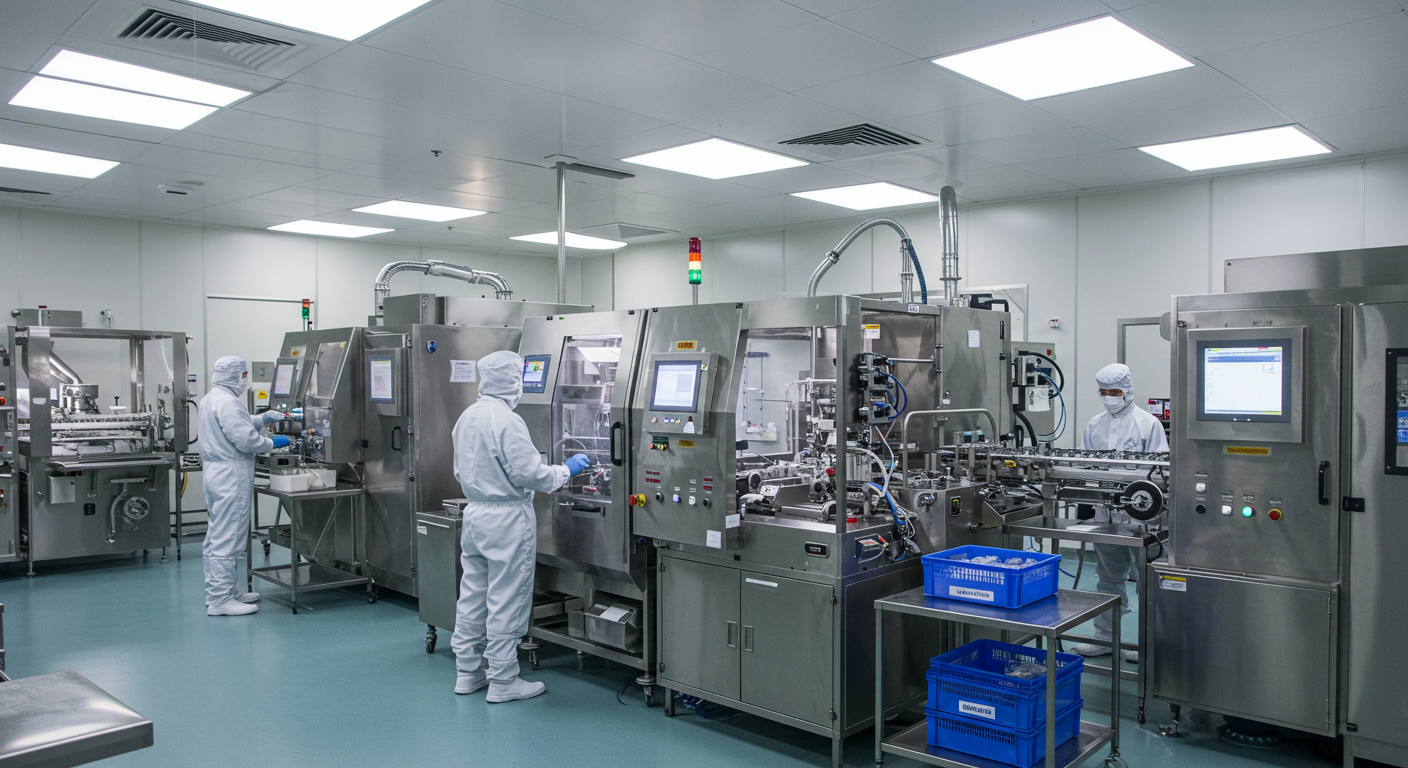
Key Regulatory Requirements
GMP (Good Manufacturing Practices)
The foundation of pharmaceutical quality. All pharmaceutical contract manufacturers must operate under GMP conditions approved by the relevant health authority.
Regulatory Approvals by Market
- Turkey (TITCK): Turkish Medicines and Medical Devices Agency approval
- EU: EMA approval and EU GMP certification
- USA: FDA registration and cGMP compliance
- WHO GMP: Required for developing country markets and WHO prequalified products
Medical Device Standards
- ISO 13485 - Medical devices quality management system
- CE Marking for EU market access
- FDA 510(k) clearance for USA
- ISO 14971 - Risk management for medical devices
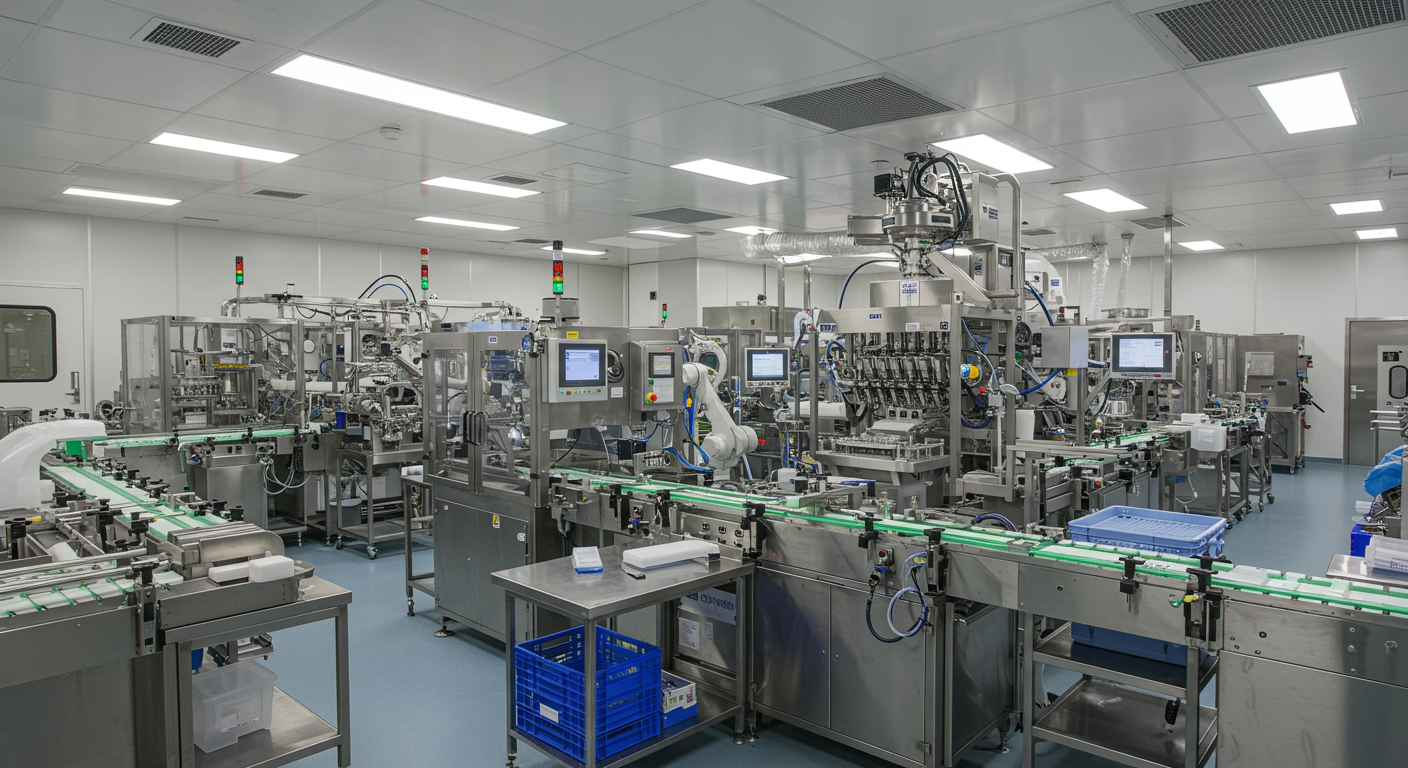
Choosing a Pharma Contract Manufacturer
- Verify all relevant regulatory certifications are current
- Conduct GMP audit before signing any agreement
- Review track record with similar products
- Assess analytical testing capabilities
- Confirm experience with your regulatory target markets
For general contract manufacturing guidance, see What is Contract Manufacturing and How to Prepare a Contract.
Pharmaceutical and Medical Device Contract Manufacturing: Supplier Decision Framework
Pharmaceutical and Medical Device Contract Manufacturing works best when regulated-product teams, quality leaders and technical buyers turn the reading into one supplier gate. In this page, Finished Dosage Form (FDF) Manufacturing should become the checkpoint that separates a loose search from a usable RFQ.
The weak version of this process is confusing a certificate with a complete device, pharma or validation-ready manufacturing file. A stronger version names the document, the owner and the next review point before anyone treats price as final.
Documents Behind the Next Gate
- quality-system scope: Use this line to turn pharmaceutical, medical, manufacturing from a keyword into a procurement control.
- risk and validation plan: Use deviation closure to decide whether Pharmaceutical and Medical Device Contract Manufacturing is ready for supplier comparison.
- device or product master information: Connect device or product master information to audit finding severity before price becomes the main filter.
- change and deviation record: Ask who owns change and deviation record and how document review cycle time will be checked.
Shortlist Move to Make Next
That discipline helps both sides: buyers compare fairly, and suppliers understand what proof earns trust.
- First: Define intended use and regulatory market.
- Then: Request the quality-system scope in writing.
- Before approval: Align validation and release evidence before commercial commitment.
Pharmaceutical and Medical Device Contract Manufacturing: Supplier Decision Note
For Pharmaceutical and Medical Device Contract Manufacturing, use the article as a supplier decision note inside Manufacturing Sectors. The practical question is not whether the topic is interesting; it is whether the buyer can define scope, request proof and decide the next gate without adding guesswork.
Start from Key Regulatory Requirements. Then turn the idea into one written brief that names the product or service scope, the acceptance rule, the document owner and the point where the project should pause.
| Control | How to use it |
|---|---|
| Scope | Define what Pharmaceutical and Medical Device Contract Manufacturing includes and excludes before supplier contact. |
| Proof | Ask which document, sample or record supports Key Regulatory Requirements. |
| Timing | Separate first reply, sample review, pilot order and volume approval for Pharmaceutical and Medical Device Contract Manufacturing. |
| Owner | Assign one person to collect missing data and update the Pharmaceutical and Medical Device Contract Manufacturing file. |
Pharmaceutical and Medical Device Contract Manufacturing: final check
- Write the buyer or supplier objective for Pharmaceutical and Medical Device Contract Manufacturing in one paragraph.
- List the documents that would make Key Regulatory Requirements verifiable.
- Compare price only after scope, evidence and timing are written.
- Keep the next action concrete: request data, approve sample, run pilot or stop.
Editorial quality checklist for Manufacturing Sectors
Pharmaceutical and Medical Device Contract Manufacturing EN guide should be used as a working decision file, not only as a reading page. The practical check is whether a buyer can leave the article with a clear scope, required evidence, supplier questions, risk owner and next action for Manufacturing Sectors.
For stronger SEO and buyer usefulness, this page now connects the topic to proof, implementation and related sourcing paths. That reduces thin-content risk and helps the reader move from general research to a verifiable supplier or operating decision.
- Define the decision: write product or service scope, target market, expected volume, approval owner and the date of the next review.
- Ask for current evidence: request documents that match this exact product, service, batch, process or customer scenario.
- Compare complete answers: score response quality, missing data, correction speed and commercial assumptions before comparing price.
- Keep the first order controlled: connect sample approval, release criteria, logistics, payment terms and corrective action in one note.
| Review area | Quality question |
|---|---|
| Scope | Product, market, volume, owner and release rule are written before supplier comparison. |
| Evidence | Specification, sample, quality record, certificate, label or service proof is checked for date and relevance. |
| Decision | The buyer records what can be approved now, what is blocked and who owns the next correction. |
FAQ for this article
What should be checked first for Manufacturing Sectors?
Start with the decision file: scope, evidence, acceptance criteria, delivery assumptions and the person who can approve or stop the next step.
How does this article support supplier or partner selection?
It turns the topic into a checklist of records, questions and comparison rules, so the reader can separate a strong answer from a generic sales reply.
When should the reader move to a related guide?
Move to a related guide when the next risk is outside the current page, such as supplier discovery, contract manufacturing, food safety, logistics or company verification.
Useful cross-site next reads
Read Before Moving Forward
Related checks for Pharmaceutical and Medical Device Contract Manufacturing: review these pages before supplier approval or production release.
- Food Contract Manufacturing: Private Label Supplier Selection
- Cosmetics Contract Manufacturing: GMP, MOQ and Supplier Selection
- Electronics Contract Manufacturing (EMS): PCB Assembly Supplier Guide
- Contract Manufacturing Processes: Step by Step Guide
- Quality Management in Contract Manufacturing
- How to Prepare a Manufacturing Contract
- Choosing the Right Contract Manufacturing Partner
- What is Contract Manufacturing? Complete Guide
Sources and Further Reading
Source check for Pharmaceutical and Medical Device Contract Manufacturing: official standards, regulator pages and sector references are listed below. Validate final legal, medical, food or export decisions against the current primary text.