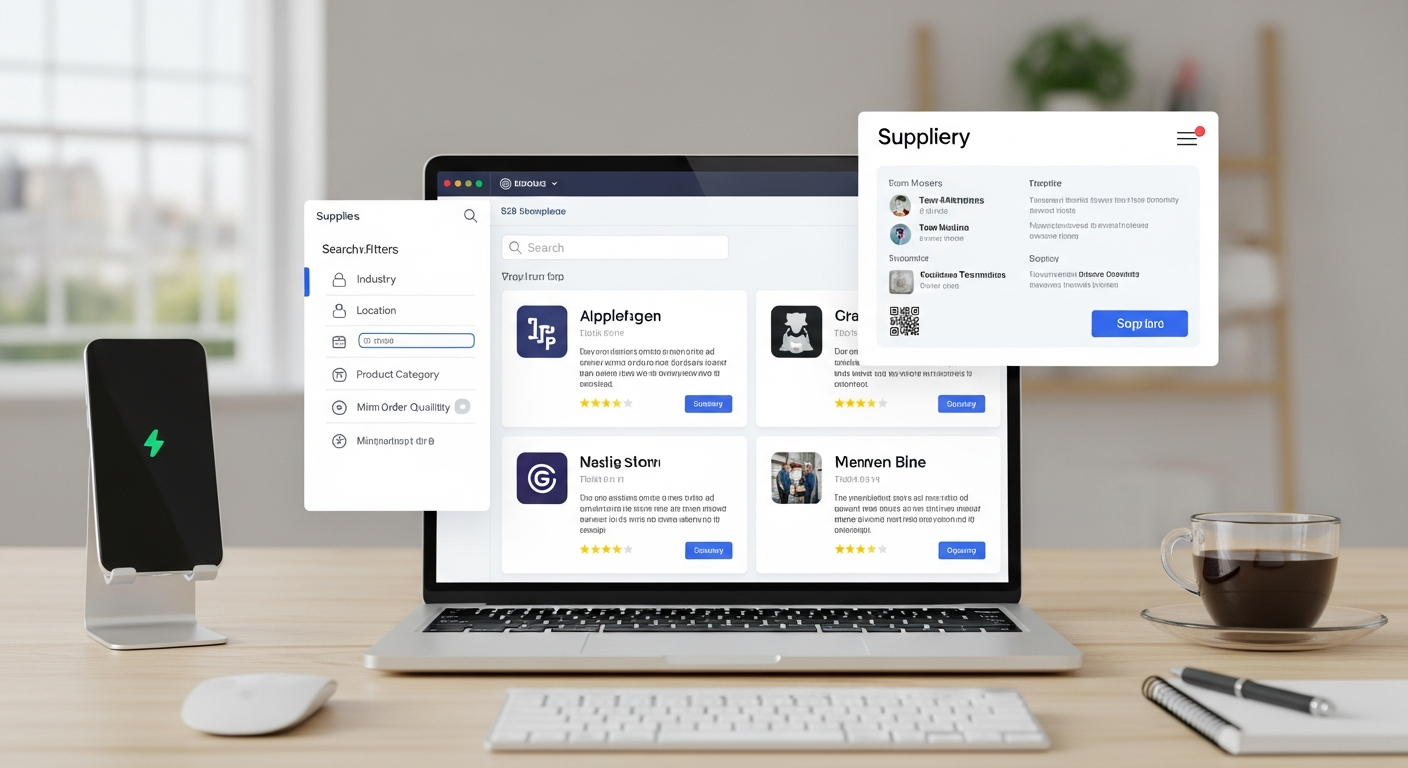
A supplier profile for contract manufacturing jobs should read like a pre-qualification file. The buyer is not only asking who the company is; the buyer is checking whether the supplier deserves time in the RFQ process.
A good profile makes trade-offs visible. It says which jobs fit, which volumes are realistic, what the sample process looks like, which evidence can be shared and who is responsible for follow-up.
This article focuses on profile architecture rather than general promotion, because the profile is where many manufacturers either gain trust or lose the buyer silently.

The opening line should narrow the promise
A broad opening line creates uncertainty. A narrow opening line helps the buyer place the supplier immediately: product form, process type, sector, order profile and commercial fit.
For example, a filling company, textile workshop and food supplement manufacturer should not open with the same promise. Each should show what kind of contract manufacturing job it is prepared to receive.
- Combine sector, product form and service type in the first sentence.
- Use capacity ranges only when the team can stand behind them.
- Explain whether the supplier serves startups, established brands or industrial buyers.
- Avoid claiming every sector unless the profile can prove it.
Capacity and MOQ are trust fields
Capacity language protects both sides. If a supplier hides minimums, buyers may send attractive but unrealistic requests. If the profile states practical ranges, the buyer can judge fit before asking for price.
MOQ does not always need to be a single number. It can be expressed by product family, pilot stage or packaging format, as long as the limitation is honest and useful.
- Separate sample quantity, pilot quantity and recurring batch quantity.
- State whether seasonality affects lead time.
- Explain what changes after formula, artwork or material approval.
- Keep capacity claims updated when the production calendar changes.
Certificates need scope, not decoration
Buyers often see certificate names used as badges. A stronger profile explains what the certificate covers, which facility or process it applies to and when records can be shared.
If a certificate is not available, the profile should still explain current quality controls. Honesty is better than overclaiming, especially in food, cosmetics, supplements, medical or export-sensitive work.
- Mention the scope and validity area of each certificate.
- Describe inspection, release and batch-record practices.
- State when documents are shared: before quote, after NDA or after shortlist.
- Keep regulatory responsibility separate from commercial promises.
The profile should ask the buyer for the right inputs
A supplier profile is also a request for better information. It should tell buyers what to send: product description, target volume, packaging, market, timeline, drawings, formula status or quality expectations.
This small change improves conversion. Instead of a passive brochure, the profile becomes a controlled intake point.
- List required buyer inputs at the end of the profile.
- Provide examples of good project briefs.
- Mention when NDA is needed before technical detail.
- Use direct but professional next-step language.
How to publish this profile on TR2B
The TR2B company profile should hold the supplier identity, while service listings should hold specific production offers. This avoids a single overloaded profile and lets buyers land on the service closest to their need.
Treat each service page as a small operating promise: what is offered, what is needed from the buyer, which evidence exists and how the next message should start.
TR2B profile setup | TR2B platform features | TR2B membership options
Supplier profile audit checklist
- Does the first sentence define sector, product form and service type?
- Are MOQ, sample process and lead time explained without vague promises?
- Are certificates described with scope and document timing?
- Can a buyer see what information to send before asking for price?
- Are service listings separated instead of buried in one profile paragraph?
Conclusion
A supplier profile earns contract manufacturing jobs when it reduces buyer uncertainty. It should be specific enough for search, strict enough for pre-qualification and practical enough to start a real RFQ.
The best profile does not exaggerate capability. It gives the buyer a clean route from interest to evidence.
Editorial quality checklist for Customer Acquisition for Contract Manufacturers
Supplier Profile for Contract Manufacturing Jobs EN guide should be used as a working decision file, not only as a reading page. The practical check is whether a buyer can leave the article with a clear scope, required evidence, supplier questions, risk owner and next action for Customer Acquisition for Contract Manufacturers.
For stronger SEO and buyer usefulness, this page now connects the topic to proof, implementation and related sourcing paths. That reduces thin-content risk and helps the reader move from general research to a verifiable supplier or operating decision.
- Define the decision: write product or service scope, target market, expected volume, approval owner and the date of the next review.
- Ask for current evidence: request documents that match this exact product, service, batch, process or customer scenario.
- Compare complete answers: score response quality, missing data, correction speed and commercial assumptions before comparing price.
- Keep the first order controlled: connect sample approval, release criteria, logistics, payment terms and corrective action in one note.
| Review area | Quality question |
|---|---|
| Scope | Product, market, volume, owner and release rule are written before supplier comparison. |
| Evidence | Specification, sample, quality record, certificate, label or service proof is checked for date and relevance. |
| Decision | The buyer records what can be approved now, what is blocked and who owns the next correction. |
FAQ for this article
What should be checked first for Customer Acquisition for Contract Manufacturers?
Start with the decision file: scope, evidence, acceptance criteria, delivery assumptions and the person who can approve or stop the next step.
How does this article support supplier or partner selection?
It turns the topic into a checklist of records, questions and comparison rules, so the reader can separate a strong answer from a generic sales reply.
When should the reader move to a related guide?
Move to a related guide when the next risk is outside the current page, such as supplier discovery, contract manufacturing, food safety, logistics or company verification.
Useful cross-site next reads
Guides That Strengthen Your Supplier Profile
Related checks for Supplier Profile for Contract Manufacturing Jobs: review these pages before supplier approval or production release.
- How Contract Manufacturers Find Customers
- Turning Unused Production Capacity into B2B Demand
- TR2B Benefits for Suppliers: Finding New Customers and Building B2B Demand
- Trusted Supplier Profile on B2B Platforms
- Contract Manufacturing Quote Template: Scope, MOQ and Lead Time
- Online Contract Manufacturing Platforms: RFQ and Supplier Search Guide
- Choosing the Right Contract Manufacturing Partner
- What is Contract Manufacturing? Complete Guide
Sources and Further Reading
Source check for Supplier Profile for Contract Manufacturing Jobs: official standards, regulator pages and sector references are listed below. Validate final legal, medical, food or export decisions against the current primary text.