Food contract manufacturers win better customers when they reduce food-safety uncertainty before the first call. A brand owner is not only buying production; the buyer is asking whether hygiene, labeling, shelf life, packaging and traceability can be handled responsibly.
Food buyers carry visible brand risk. An allergen mistake, shelf-life failure or label issue can damage the launch even if the unit price looked attractive.
This article shows how food suppliers can turn that risk into a trust advantage through clearer service pages, intake questions and TR2B profile evidence.
Food buyers screen risk before price
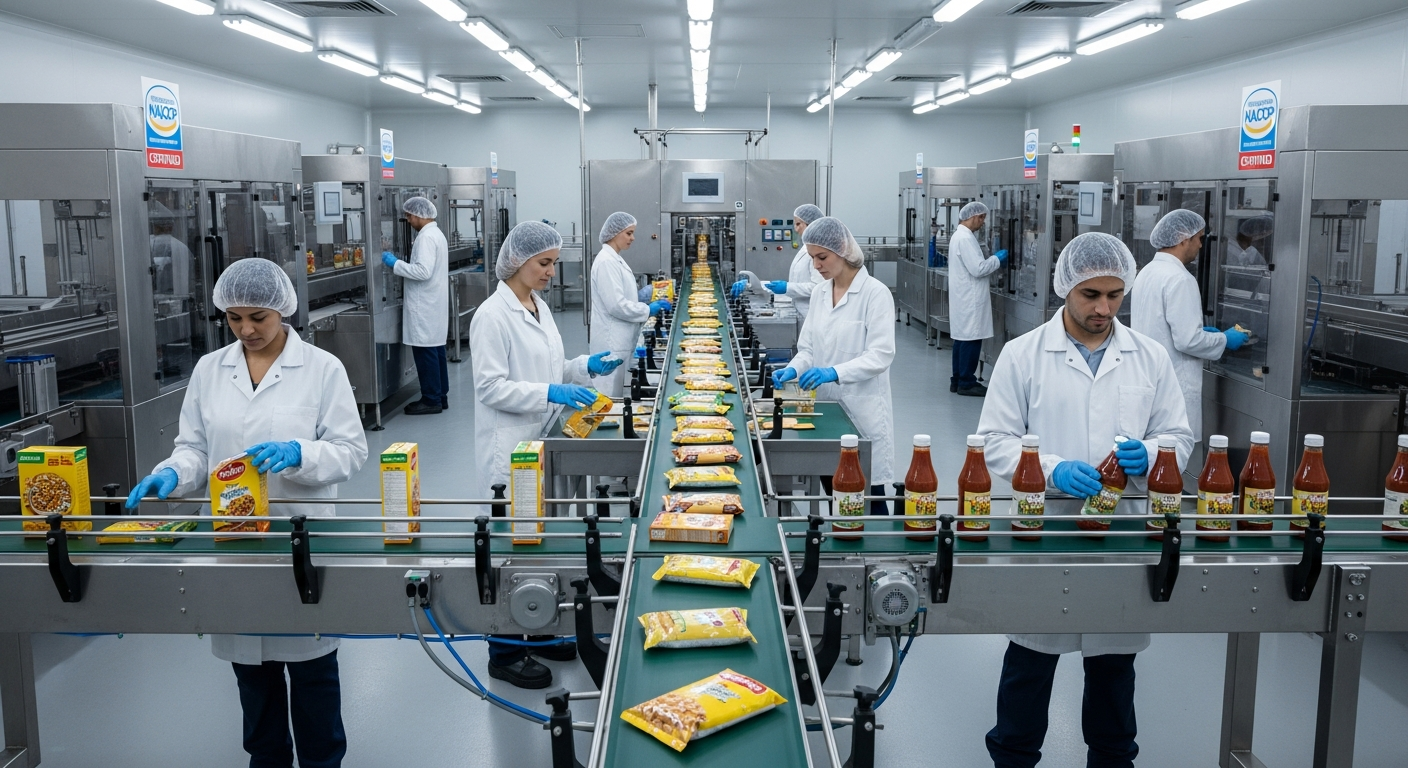
The first decision is often whether the supplier appears safe enough to contact. Buyers look for hygiene discipline, product-family experience, allergen awareness, packaging logic and documentation readiness.
A manufacturer that explains these topics calmly will attract stronger RFQs than a manufacturer that lists product types without process evidence.
- Show production permission or quality-system scope where relevant.
- Explain allergen and cross-contact controls.
- Mention shelf-life and analysis approach.
- Separate recipe ownership, formulation support and filling-only work.
Product development is a commercial differentiator
Many food buyers know the product idea but not the recipe, process, packaging or market constraints. A supplier that can guide the early technical conversation becomes more valuable than a supplier that only waits for a perfect brief.
The profile should explain which support is available: formulation, pilot batch, packaging advice, label review support or production-only execution.
- Clarify whether formulation support is available.
- Describe sample and revision stages.
- State packaging options by product type.
- Explain what the buyer must provide before sampling.
Use narrow food service titles
Food is too broad for one generic service page. Sauce filling, dry mix blending, snack packing, beverage shots, organic food production and private label support need different titles and buyer inputs.
Narrow titles improve search discovery and reduce irrelevant inquiries. They also make the supplier appear more serious in the specific product area.
- Use product form in the service title.
- Mention dry, liquid, chilled, powdered or packaged format where relevant.
- Add MOQ and sample expectations by product type.
- Keep claims and target-market language careful.
Use an RFQ intake form before quoting
Food quotes are weak when target market, packaging, ingredient status, allergen profile, shelf life and target quantity are missing. The supplier should ask for this data before giving a final number.
A good intake flow saves time and signals professional discipline to the buyer.
- Request product form, gram weight and target annual or launch volume.
- Ask whether a recipe exists or development is needed.
- Collect packaging and label responsibility early.
- Ask target market and document expectations before pricing.
TR2B workflow for food supplier visibility
On TR2B, food suppliers should publish service listings by product form and production model. The category page can attract the buyer, but the service title and description decide whether the buyer sends a serious message.
The profile should connect hygiene, documentation and RFQ intake. That turns food-safety discipline into customer acquisition, not just compliance background.
TR2B food contract manufacturing category | TR2B vitamin gummy service example | TR2B profile guide
Food supplier acquisition checklist
- Are product forms listed as separate services?
- Does the profile explain hygiene, allergen, shelf-life and packaging controls?
- Are recipe development and production-only work separated?
- Does the RFQ intake ask for target market and label responsibility?
- Are food claims kept careful and document-led?
Conclusion
Food contract manufacturers gain better customers by showing safety and process discipline before price discussion.
The supplier that makes food risk visible and manageable will receive fewer vague requests and more brand-owner briefs that can move toward sample and pilot production.
Editorial quality checklist for Sectoral Contract Supplier Guides
Customer Acquisition for Food Contract Manufacturers EN guide should be used as a working decision file, not only as a reading page. The practical check is whether a buyer can leave the article with a clear scope, required evidence, supplier questions, risk owner and next action for Sectoral Contract Supplier Guides.
For stronger SEO and buyer usefulness, this page now connects the topic to proof, implementation and related sourcing paths. That reduces thin-content risk and helps the reader move from general research to a verifiable supplier or operating decision.
- Define the decision: write product or service scope, target market, expected volume, approval owner and the date of the next review.
- Ask for current evidence: request documents that match this exact product, service, batch, process or customer scenario.
- Compare complete answers: score response quality, missing data, correction speed and commercial assumptions before comparing price.
- Keep the first order controlled: connect sample approval, release criteria, logistics, payment terms and corrective action in one note.
| Review area | Quality question |
|---|---|
| Scope | Product, market, volume, owner and release rule are written before supplier comparison. |
| Evidence | Specification, sample, quality record, certificate, label or service proof is checked for date and relevance. |
| Decision | The buyer records what can be approved now, what is blocked and who owns the next correction. |
FAQ for this article
What should be checked first for Sectoral Contract Supplier Guides?
Start with the decision file: scope, evidence, acceptance criteria, delivery assumptions and the person who can approve or stop the next step.
How does this article support supplier or partner selection?
It turns the topic into a checklist of records, questions and comparison rules, so the reader can separate a strong answer from a generic sales reply.
When should the reader move to a related guide?
Move to a related guide when the next risk is outside the current page, such as supplier discovery, contract manufacturing, food safety, logistics or company verification.
Useful cross-site next reads
Guides That Strengthen Demand Capture
Related checks for Customer Acquisition for Food Contract Manufacturers: review these pages before supplier approval or production release.
- Private Label and Filling Manufacturers on TR2B
- Digital Demand for Supplement and Gummy Manufacturers
- Private Label Filling Services: How to Position Filling Capability Online
- Vitamin Gummy Market and Manufacturing Opportunities
- Dietary Supplement Contract Manufacturing Guide
- What is Contract Manufacturing? Complete Guide
- Contract Manufacturing: Advantages and Disadvantages
- Contract Manufacturing Processes: Step by Step Guide
Sources and Further Reading
Source check for Customer Acquisition for Food Contract Manufacturers: official standards, regulator pages and sector references are listed below. Validate final legal, medical, food or export decisions against the current primary text.