Probiotic and prebiotic products represent one of the fastest-growing segments in the dietary supplement market. The global probiotic market is projected to exceed $90 billion by 2030, driven by growing scientific evidence for gut health and immune function benefits.
Probiotics vs. Prebiotics
Probiotics
Live microorganisms that, when administered in adequate amounts, confer a health benefit on the host (WHO definition). Most probiotics belong to the Lactobacillus and Bifidobacterium genera.

Prebiotics
Non-digestible food ingredients that selectively feed beneficial gut bacteria. Inulin, FOS (fructooligosaccharides), GOS (galactooligosaccharides), and resistant starch are the most common prebiotics.
Synbiotics
Products combining both probiotics and prebiotics. The prebiotic selectively feeds the probiotic strain(s) in the formula, potentially enhancing efficacy.
Probiotic Manufacturing Process
Strain Selection
Choose clinically studied strains with documented health benefits relevant to your product. Strains are sourced from licensed culture banks (ATCC, DSM, etc.).
Fermentation
Selected strains are grown under controlled conditions of temperature, pH, and oxygen level. Scale-up from lab to commercial fermentation requires careful process validation.
Freeze-Drying (Lyophilization)
The most effective method for preserving probiotic viability. Frozen bacterial cells are slowly dried under vacuum, creating a shelf-stable powder.
Encapsulation and Packaging
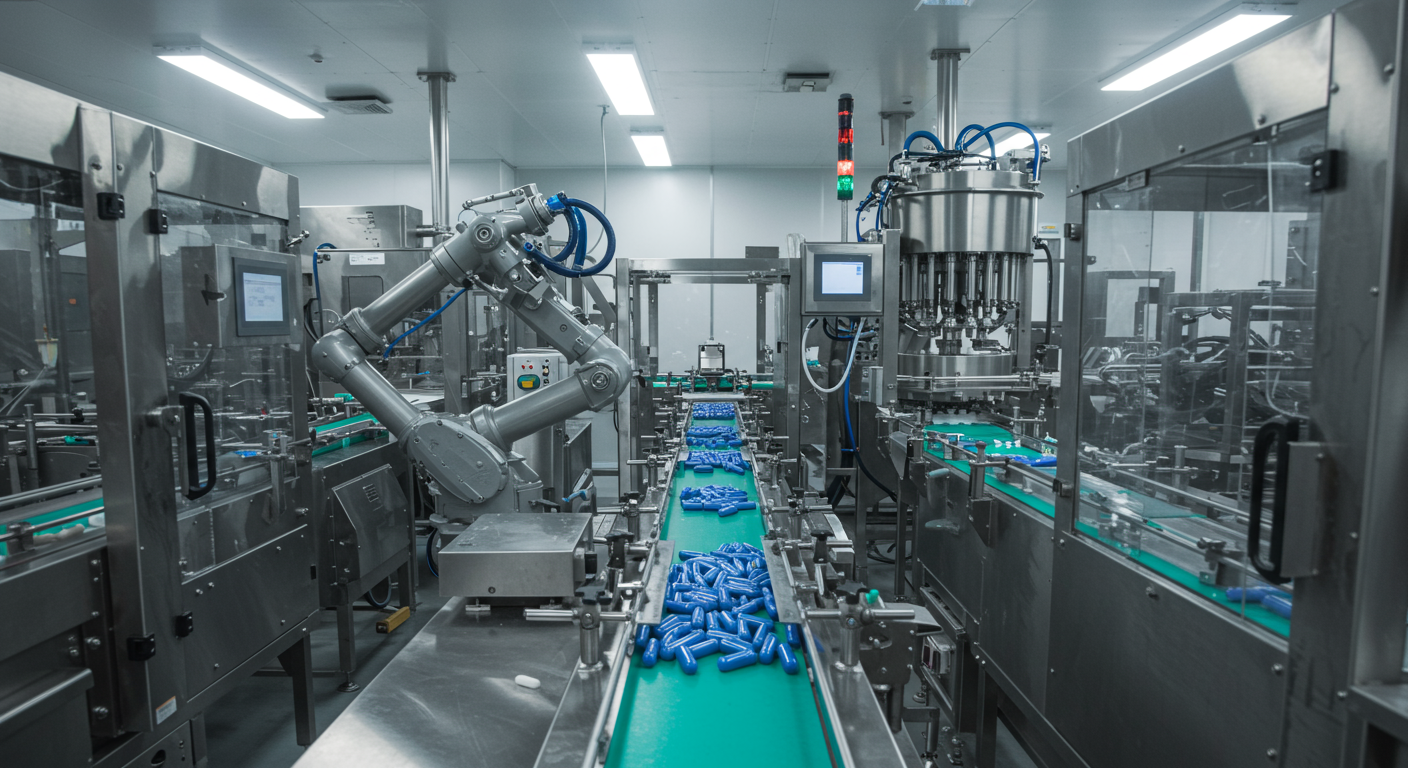
Freeze-dried probiotic powder is filled into capsules or sachets under low-humidity conditions. Moisture control is critical at this stage.
Key Technical Specifications
- CFU Count: Colony Forming Units guaranteed at end of shelf life (not just at manufacture)
- Strain Identity: DNA-based strain verification (16S rRNA sequencing)
- Stability: Shelf life study at target storage conditions
- Moisture: Water activity (<0.3) critical for maintaining viability
Finding Probiotic Manufacturers
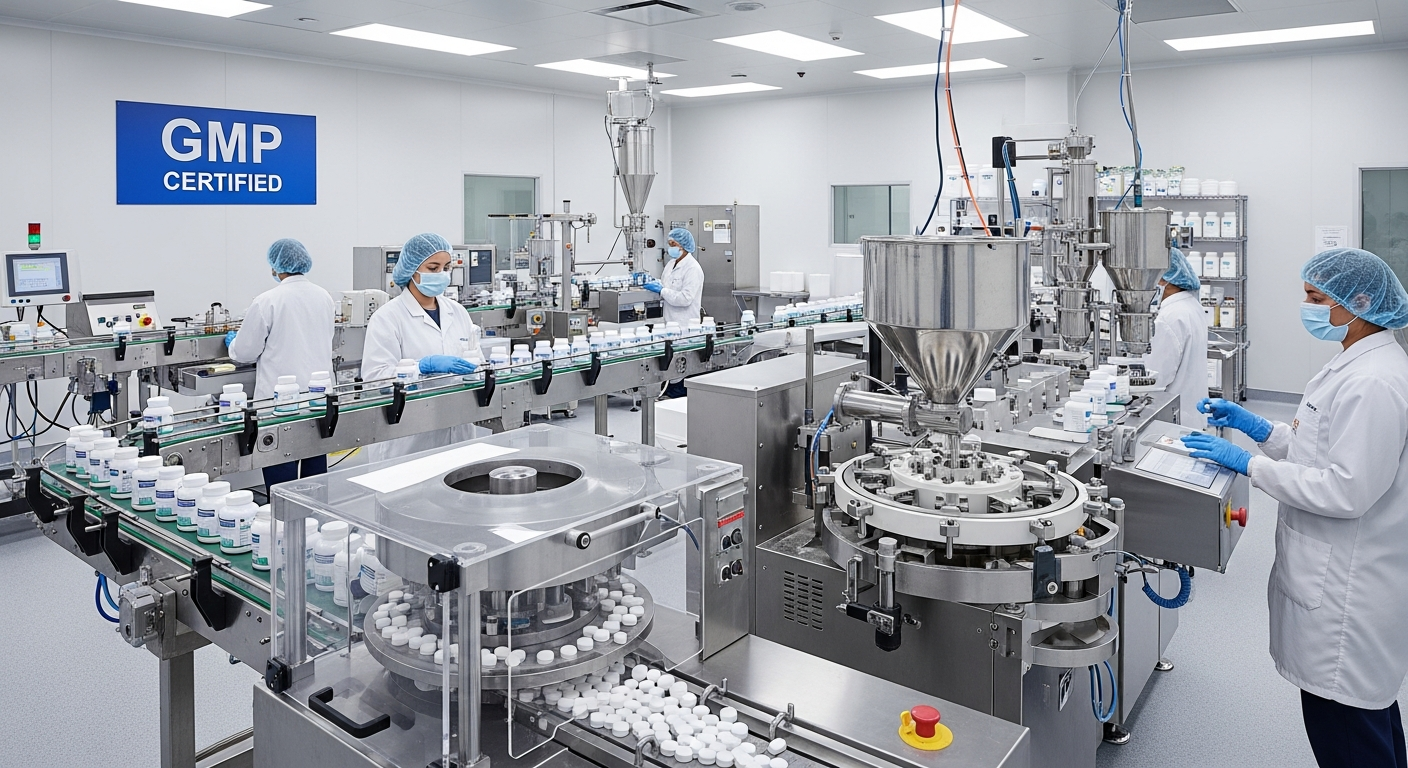
Turkey has growing capabilities in probiotic manufacturing, particularly for capsule and sachet formats. Use TR2B's dietary supplement platform to connect with GMP-certified manufacturers specializing in probiotic products.
For regulatory requirements for probiotic supplements, see Supplement Regulations and Licensing and the Supplement Manufacturing Guide.
Probiotic and Prebiotic Contract Manufacturing Guide: Supplier Decision Framework
Probiotic and Prebiotic Contract Manufacturing Guide is most valuable when it changes the next supplier message. The buyer should leave with a sharper request around Prebiotics, while the supplier should know which proof has to be prepared.
The easiest way to weaken the decision is accepting a quotation before the regulatory, stability and test-report responsibilities are written down. Use the article to turn that weak point into a checklist item with an owner.
Supplier Signals Worth Checking
| Evidence | Signal | Decision Use |
|---|---|---|
| ingredient and specification file | sample approval time | Connect ingredient and specification file to sample approval time before price becomes the main filter. |
| label or claim review | complaint and nonconformance response | Use complaint and nonconformance response to decide whether Probiotic and Prebiotic Contract Manufacturing Guide is ready for supplier comparison. |
| shelf-life or stability rationale | test-report turnaround | Use this line to turn probiotic, prebiotic, manufacturing from a keyword into a procurement control. |
| batch and traceability record | certificate scope | Score batch and traceability record against the same rule across every supplier reply. |
From Reading to Supplier Action
The page earns its place when it turns broad research into one visible sourcing action.
- For Dietary Supplement Manufacturing, make this explicit: Ask for the exact product form and target market.
- For Dietary Supplement Manufacturing, make this explicit: Request certificate scope and recent test evidence.
- For Dietary Supplement Manufacturing, make this explicit: Define sample, pilot and release criteria before price comparison.
Probiotic and Prebiotic Contract Manufacturing Guide: Operating File
Probiotic and Prebiotic Contract Manufacturing Guide should become an operating file, not a loose reading note. For Dietary Supplement Manufacturing, the file should keep scope, quality evidence, commercial limits and follow-up ownership together.
Anchor the file around Probiotic Manufacturing Process. That keeps the team from comparing suppliers on price alone and makes later changes easier to audit.
| Control | How to use it |
|---|---|
| Scope | Define what Probiotic and Prebiotic Contract Manufacturing Guide includes and excludes before supplier contact. |
| Proof | Ask which document, sample or record supports Probiotic Manufacturing Process. |
| Timing | Separate first reply, sample review, pilot order and volume approval for Probiotic and Prebiotic Contract Manufacturing Guide. |
| Owner | Assign one person to collect missing data and update the Probiotic and Prebiotic Contract Manufacturing Guide file. |
Probiotic and Prebiotic Contract Manufacturing Guide: final check
- Write the buyer or supplier objective for Probiotic and Prebiotic Contract Manufacturing Guide in one paragraph.
- List the documents that would make Probiotic Manufacturing Process verifiable.
- Compare price only after scope, evidence and timing are written.
- Keep the next action concrete: request data, approve sample, run pilot or stop.
Editorial quality checklist for Dietary Supplement Manufacturing
Probiotic and Prebiotic Contract Manufacturing Guide EN guide should be used as a working decision file, not only as a reading page. The practical check is whether a buyer can leave the article with a clear scope, required evidence, supplier questions, risk owner and next action for Dietary Supplement Manufacturing.
For stronger SEO and buyer usefulness, this page now connects the topic to proof, implementation and related sourcing paths. That reduces thin-content risk and helps the reader move from general research to a verifiable supplier or operating decision.
- Define the decision: write product or service scope, target market, expected volume, approval owner and the date of the next review.
- Ask for current evidence: request documents that match this exact product, service, batch, process or customer scenario.
- Compare complete answers: score response quality, missing data, correction speed and commercial assumptions before comparing price.
- Keep the first order controlled: connect sample approval, release criteria, logistics, payment terms and corrective action in one note.
| Review area | Quality question |
|---|---|
| Scope | Product, market, volume, owner and release rule are written before supplier comparison. |
| Evidence | Specification, sample, quality record, certificate, label or service proof is checked for date and relevance. |
| Decision | The buyer records what can be approved now, what is blocked and who owns the next correction. |
FAQ for this article
What should be checked first for Dietary Supplement Manufacturing?
Start with the decision file: scope, evidence, acceptance criteria, delivery assumptions and the person who can approve or stop the next step.
How does this article support supplier or partner selection?
It turns the topic into a checklist of records, questions and comparison rules, so the reader can separate a strong answer from a generic sales reply.
When should the reader move to a related guide?
Move to a related guide when the next risk is outside the current page, such as supplier discovery, contract manufacturing, food safety, logistics or company verification.
Useful cross-site next reads
Guides That Complete the Supplement Decision
Related checks for Probiotic and Prebiotic Contract Manufacturing Guide: review these pages before supplier approval or production release.
- Vitamin Gummy Market and Manufacturing Opportunities
- Dietary Supplement Contract Manufacturing Guide
- Dietary Supplement Regulations and Licensing
- Quality Management in Contract Manufacturing
- How to Prepare a Manufacturing Contract
- What is Contract Manufacturing? Complete Guide
- Contract Manufacturing: Advantages and Disadvantages
- Contract Manufacturing Processes: Step by Step Guide
Sources and Further Reading
Source check for Probiotic and Prebiotic Contract Manufacturing Guide: official standards, regulator pages and sector references are listed below. Validate final legal, medical, food or export decisions against the current primary text.