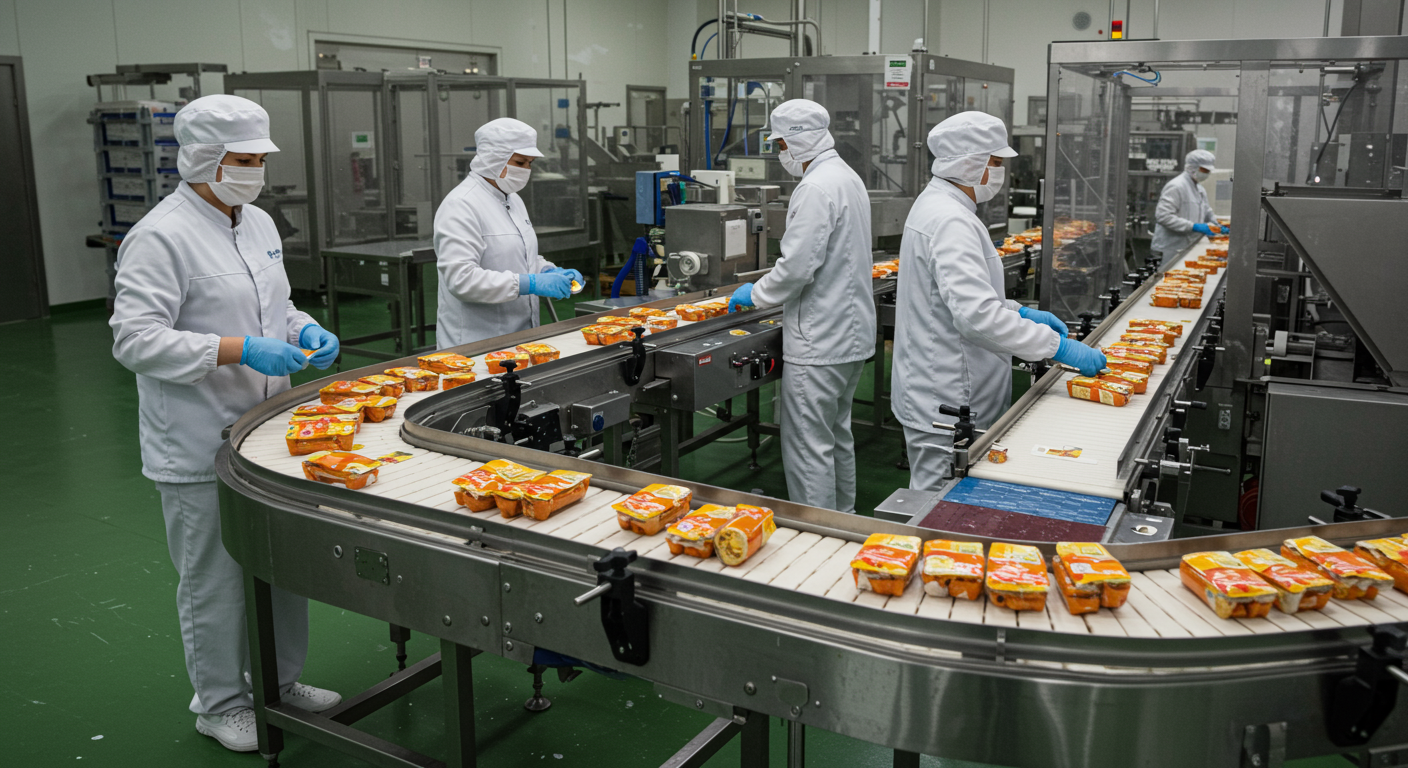
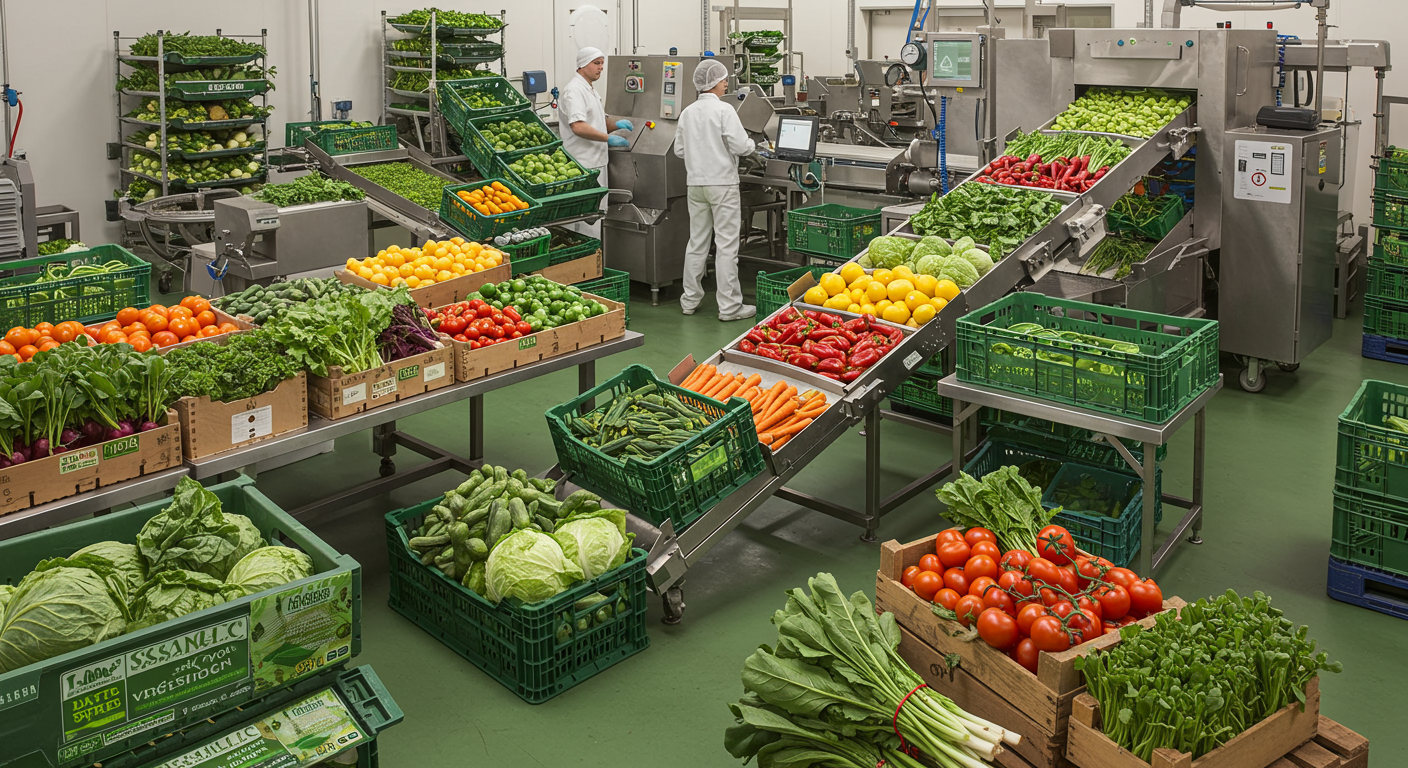
Contract manufacturing in the food sector enables brands to bring their products to market through expert food manufacturers without establishing their own production facilities. Turkey's food contract manufacturing sector is growing every year and offering significant opportunities to new entrepreneurs.
What is Food Contract Manufacturing?
Food contract manufacturing is the production of food products by another manufacturing facility according to a brand's or company's own recipes and formulations. This model is widely used in snacks, beverages, canned goods, frozen foods, spices, sauces, bakery products, and many other categories.
Legal Requirements for Food Contract Manufacturing
Companies wishing to engage in food contract manufacturing must comply with regulations set by the Ministry of Agriculture and Forestry. Key legal requirements include:
- Food Business Registration: The production facility must obtain a business registration certificate
- HACCP Certificate: Implementation of Hazard Analysis and Critical Control Points system is required
- ISO 22000: Food safety management system certification is recommended
- Halal Certification: Halal certification provides advantages for domestic and export markets
- Labeling Regulations: Compliance with Turkish Food Codex labeling requirements is mandatory
Food Contract Manufacturing Process
1. Product Development and Formulation
The first step is creating the product formulation. Brand owners can bring their own recipes or get support from the manufacturer's R&D team. Taste tests, shelf life studies, and nutritional value analyses are conducted at this stage.
2. Sample Production and Approval
After formulation is determined, sample production takes place. Samples are evaluated for taste, smell, texture, color, and packaging. After necessary revisions, the final sample is approved.
3. Raw Material Procurement
Quality and reliable raw material procurement is one of the most critical stages of food contract manufacturing.

4. Production and Quality Control
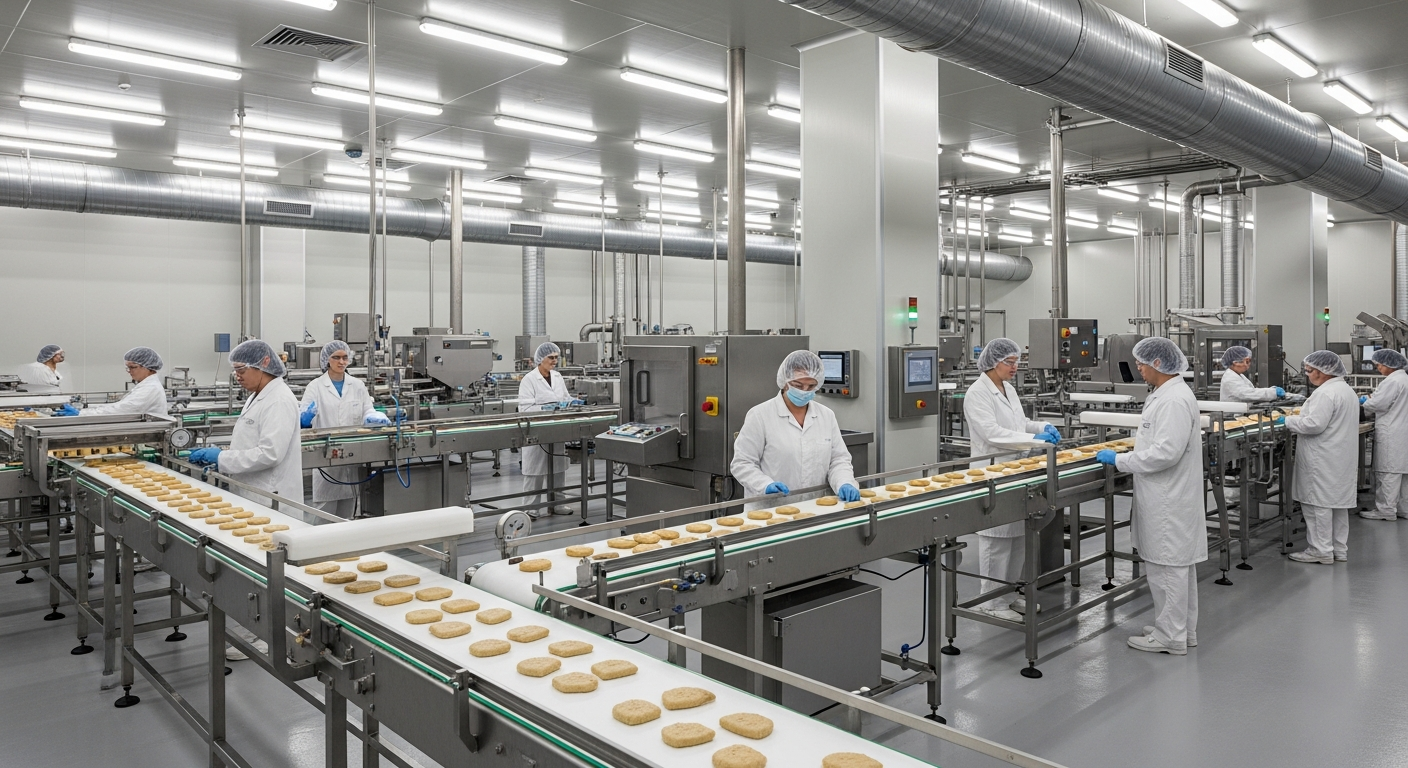
During mass production, manufacturing is carried out in accordance with HACCP principles. Samples are taken from each batch for microbiological and chemical analyses.
5. Packaging and Labeling
Products are packaged with food safety standard-compliant packaging materials. Labels are prepared in accordance with the Turkish Food Codex.
Finding Food Contract Manufacturers in Turkey
One of the most effective methods for finding food contract manufacturers in Turkey is using the TR2B platform. Through TR2B, you can reach hundreds of food sector contract manufacturers, review their capacity and certification information, and request quotes directly.
What to Look for When Choosing a Food Manufacturer
- Certifications: International certifications such as ISO 22000, HACCP, BRC, IFS
- Production Capacity: Minimum order quantity and monthly production capacity
- Hygiene Standards: Facility hygiene, personnel training, and cleaning protocols
- R&D Support: Formulation development and product improvement capabilities
- References: Previous brand partnerships and customer satisfaction
For dietary supplement manufacturing, see Dietary Supplement Manufacturing Guide. For contract preparation, see How to Prepare a Contract.
Food Sector Contract Manufacturing: Complete Guide: Supplier Decision Framework
For Food Contract Manufacturing, Food Sector Contract Manufacturing: Complete Guide should reduce ambiguity before the first quote. That means turning 2. Sample Production and Approval into written scope, evidence and a clear stop-go rule.
When teams rush, they often fall into accepting a quotation before the regulatory, stability and test-report responsibilities are written down. The fix is simple: separate fact, assumption and open question before the quote is scored.
Documents Behind the Next Gate
- ingredient and specification file: Treat sample approval time as the signal that separates a claim from usable proof.
- label or claim review: Make label or claim review visible in the file so the next buyer can audit the decision.
- shelf-life or stability rationale: If test-report turnaround is weak, keep Food Sector Contract Manufacturing: Complete Guide in clarification rather than approval.
- batch and traceability record: Ask who owns batch and traceability record and how certificate scope will be checked.
Shortlist Move to Make Next
For Food Contract Manufacturing, this keeps the page useful for searchers who are already close to a supplier decision.
- First: Ask for the exact product form and target market.
- Then: Request certificate scope and recent test evidence.
- Before approval: Define sample, pilot and release criteria before price comparison.
Food Sector Contract Manufacturing: Complete Guide: Operating File
Food Sector Contract Manufacturing: Complete Guide should become an operating file, not a loose reading note. For Food Contract Manufacturing, the file should keep scope, quality evidence, commercial limits and follow-up ownership together.
Anchor the file around What is Food Contract Manufacturing?. That keeps the team from comparing suppliers on price alone and makes later changes easier to audit.
| Control | How to use it |
|---|---|
| Scope | Define what Food Sector Contract Manufacturing: Complete Guide includes and excludes before supplier contact. |
| Proof | Ask which document, sample or record supports What is Food Contract Manufacturing?. |
| Timing | Separate first reply, sample review, pilot order and volume approval for Food Sector Contract Manufacturing: Complete Guide. |
| Owner | Assign one person to collect missing data and update the Food Sector Contract Manufacturing: Complete Guide file. |
Food Sector Contract Manufacturing: Complete Guide: final check
- Write the buyer or supplier objective for Food Sector Contract Manufacturing: Complete Guide in one paragraph.
- List the documents that would make What is Food Contract Manufacturing? verifiable.
- Compare price only after scope, evidence and timing are written.
- Keep the next action concrete: request data, approve sample, run pilot or stop.
Related buyer paths across the network
Guides That Complete the Food Sourcing Decision
Related checks for Food Sector Contract Manufacturing: Complete Guide: review these pages before supplier approval or production release.
- Food Labeling and Packaging in Contract Manufacturing
- Organic and Natural Food Contract Manufacturing
- How to Find Turkey-Based Food Manufacturers and Contract Manufacturers
- Quality Management in Contract Manufacturing
- How to Prepare a Manufacturing Contract
- What is Contract Manufacturing? Complete Guide
- Contract Manufacturing: Advantages and Disadvantages
- Contract Manufacturing Processes: Step by Step Guide
Sources and Further Reading
Source check for Food Sector Contract Manufacturing: Complete Guide: official standards, regulator pages and sector references are listed below. Validate final legal, medical, food or export decisions against the current primary text.