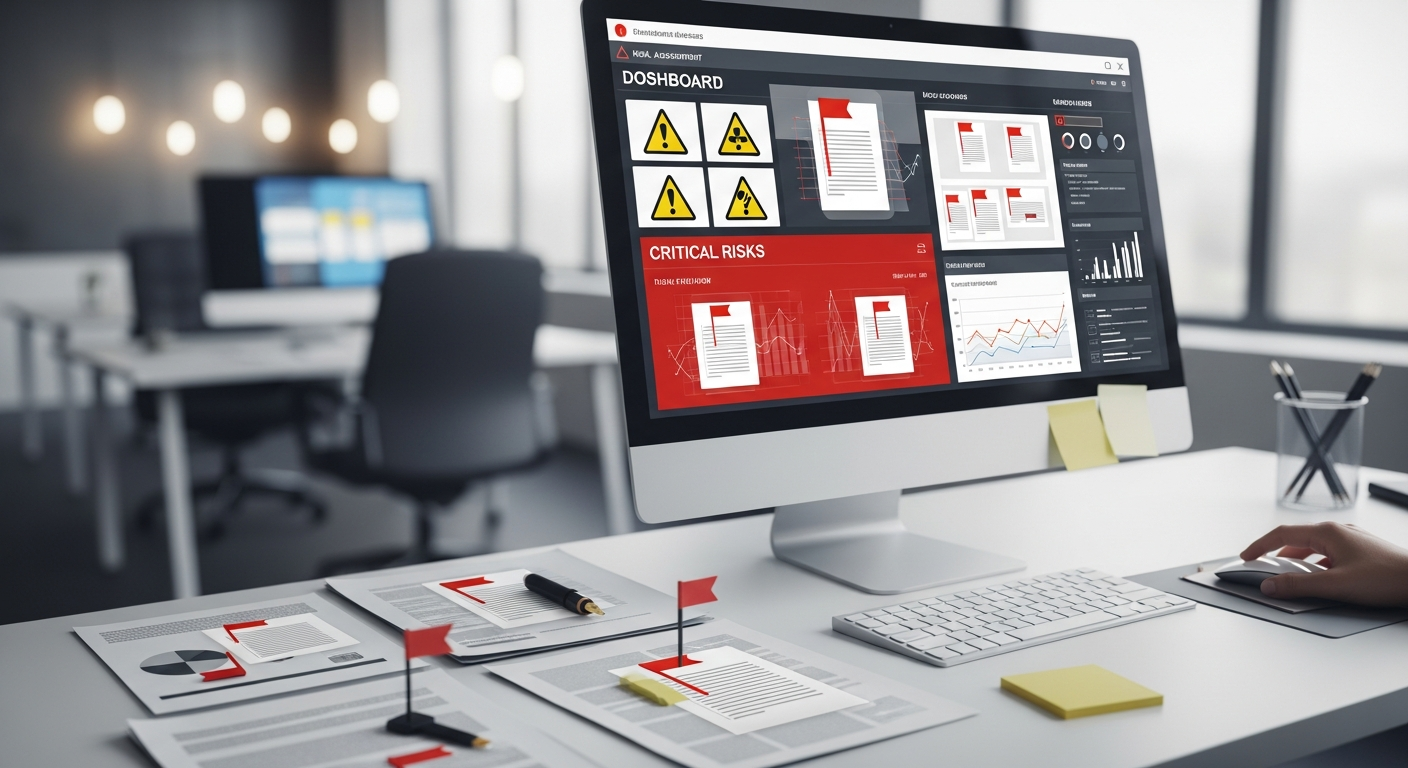
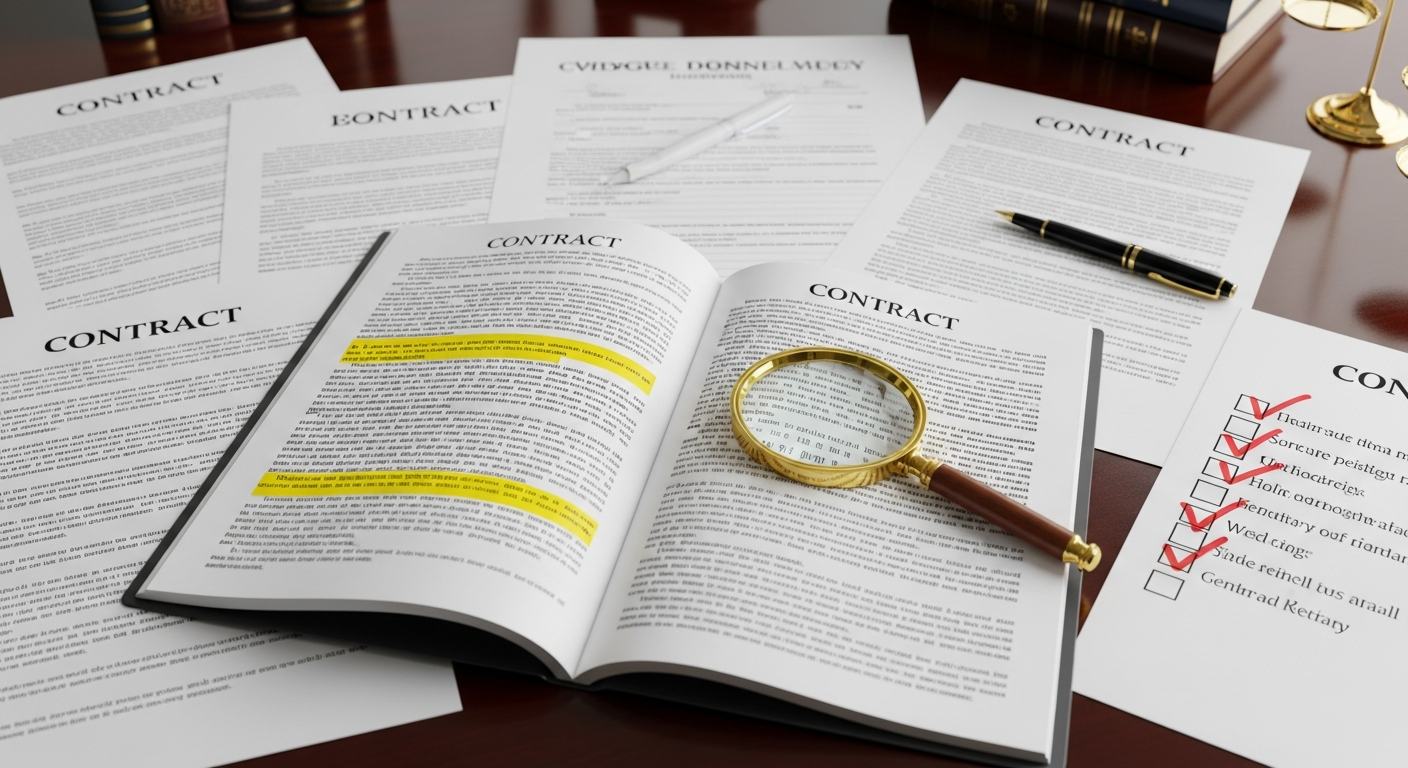
A contract manufacturing project can create more assets than the finished product: formulas, drawings, molds, fixtures, test data, artwork, supplier lists, process know-how and customer-specific improvements.
If ownership is left vague, the relationship may work during the first order and fail when volume grows, the product changes or the buyer wants to move production.

Ownership must be more specific than confidentiality
The contract should not merely say that confidential information is protected. It should say who may use which information, for which product, for how long and under what restrictions after the project ends.
A good IP clause separates pre-existing knowledge, buyer-owned specifications, manufacturer know-how, jointly developed improvements and physical tooling.
Five asset classes to separate
- List buyer-provided IP separately from manufacturer background know-how.
- State who owns molds, dies, fixtures and custom test equipment.
- Define whether process improvements are exclusive, shared or retained by the manufacturer.
- Control access to drawings, formulas and sensitive supplier data.
- Create data return, deletion or archive obligations at termination.
What trade secret sources make visible
WIPO and USPTO both emphasize that trade secrets require reasonable measures. In manufacturing, those measures are not abstract: controlled access, marked files, limited use, documented return and trained people. The practical reading is that IP protection lives in daily process, not only in the NDA heading.
Exit rights before the exit
- Create an IP schedule with asset, owner, user and restriction columns.
- Photograph and tag buyer-paid tooling before production starts.
- Define export of production data separately from confidential formulas.
- Train sales and production teams on what can be reused in future offers.
- Review IP terms whenever a new product version is introduced.
Making IP clarity a sales advantage
IP clarity attracts better buyers because serious buyers want a manufacturer that can protect their project without pretending that all know-how belongs to one side.
After this preparation, state your scope, evidence, sample process, MOQ and quality records clearly in the supplier profile. Use TR2B contract manufacturing category for the relevant category, the TR2B overview guide for profile setup and TR2B service pages when service listing is the right next step.
IP, Tooling and Data Rights in Contract Manufacturing: Who Owns What?: Supplier Decision Framework
Treat IP, Tooling and Data Rights in Contract Manufacturing: Who Owns What? as a buyer-side decision aid. The article becomes stronger when Making IP clarity a sales advantage and Exit rights before the exit are converted into questions a supplier can answer with documents.
The practical failure mode is reading definitions without translating them into evidence, owner, deadline and next action. Before approving a next step, write the evidence that would make the decision defensible.
Evidence to Put in the File
| Evidence | Signal | Decision Use |
|---|---|---|
| written scope | supplier fit | Treat supplier fit as the signal that separates a claim from usable proof. |
| supplier evidence | risk closure | Score supplier evidence against the same rule across every supplier reply. |
| quality or compliance record | decision speed | Use this line to turn tooling, data, rights, contract from a keyword into a procurement control. |
| commercial next step | document completeness | Use document completeness to decide whether IP, Tooling and Data Rights in Contract Manufacturing: Who Owns What? is ready for supplier comparison. |
How to Use This in Manufacturing Contracts
Use the page as a living note; update the supplier file when a new risk, document or market requirement appears.
- For Manufacturing Contracts, make this explicit: Write the requirement in buyer language.
- For Manufacturing Contracts, make this explicit: Ask for evidence before comparing price.
- For Manufacturing Contracts, make this explicit: Decide the next gate: sample, pilot, quote or stop.
Editorial quality checklist for Manufacturing Contracts
IP, Tooling and Data Rights in Contract Manufacturing EN guide should be used as a working decision file, not only as a reading page. The practical check is whether a buyer can leave the article with a clear scope, required evidence, supplier questions, risk owner and next action for Manufacturing Contracts.
For stronger SEO and buyer usefulness, this page now connects the topic to proof, implementation and related sourcing paths. That reduces thin-content risk and helps the reader move from general research to a verifiable supplier or operating decision.
- Define the decision: write product or service scope, target market, expected volume, approval owner and the date of the next review.
- Ask for current evidence: request documents that match this exact product, service, batch, process or customer scenario.
- Compare complete answers: score response quality, missing data, correction speed and commercial assumptions before comparing price.
- Keep the first order controlled: connect sample approval, release criteria, logistics, payment terms and corrective action in one note.
| Review area | Quality question |
|---|---|
| Scope | Product, market, volume, owner and release rule are written before supplier comparison. |
| Evidence | Specification, sample, quality record, certificate, label or service proof is checked for date and relevance. |
| Decision | The buyer records what can be approved now, what is blocked and who owns the next correction. |
FAQ for this article
What should be checked first for Manufacturing Contracts?
Start with the decision file: scope, evidence, acceptance criteria, delivery assumptions and the person who can approve or stop the next step.
How does this article support supplier or partner selection?
It turns the topic into a checklist of records, questions and comparison rules, so the reader can separate a strong answer from a generic sales reply.
When should the reader move to a related guide?
Move to a related guide when the next risk is outside the current page, such as supplier discovery, contract manufacturing, food safety, logistics or company verification.
Useful cross-site next reads
Read Before Signing
Related checks for IP, Tooling and Data Rights in Contract Manufacturing: Who Owns What?: review these pages before supplier approval or production release.
- How to Prepare a Manufacturing Contract
- The Importance of Manufacturing Contracts
- Legal Issues and Solutions in Contract Manufacturing
- Contract Manufacturing Processes: Step by Step Guide
- Choosing the Right Contract Manufacturing Partner
- Quality Management in Contract Manufacturing
- Cost Calculation in Contract Manufacturing
- What is Contract Manufacturing? Complete Guide
Sources and Further Reading
Source check for IP, Tooling and Data Rights in Contract Manufacturing: Who Owns What?: official standards, regulator pages and sector references are listed below. Validate final legal, medical, food or export decisions against the current primary text.