Contract manufacturing is a business arrangement where a company hires another manufacturer to produce products under its own brand. This model is ideal for businesses that lack production capacity or seek cost advantages.
Definition of Contract Manufacturing
Contract manufacturing occurs when a company outsources the production of its products to a third-party manufacturer. The manufacturer produces goods according to the specifications provided by the hiring company.
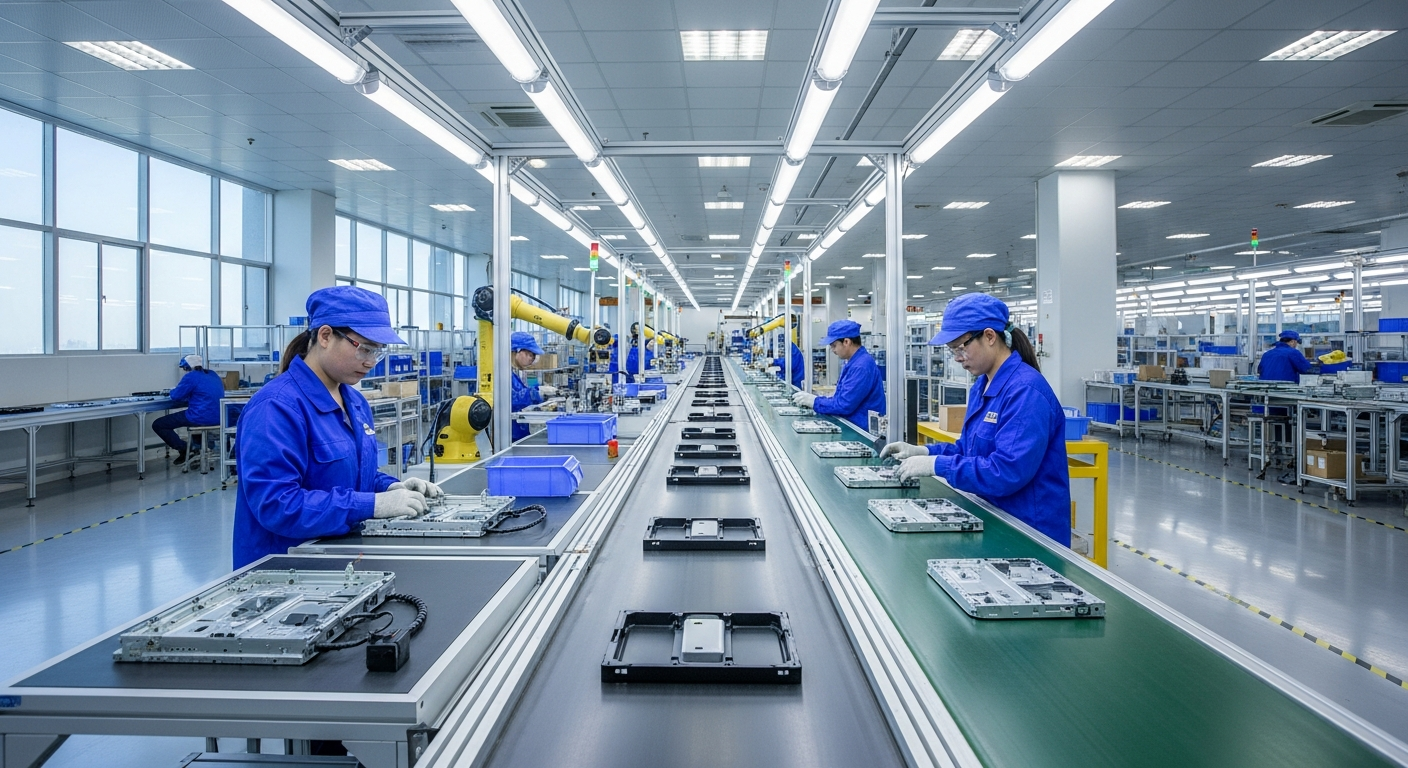
Types of Contract Manufacturing
1. Full Contract Manufacturing
The manufacturer handles everything from raw material procurement to final product delivery. The client only provides design specifications.
2. Partial Contract Manufacturing
The client provides raw materials while the manufacturer handles the production processes.
3. Labor-Only Manufacturing
Only specific labor operations are outsourced to the contract manufacturer.
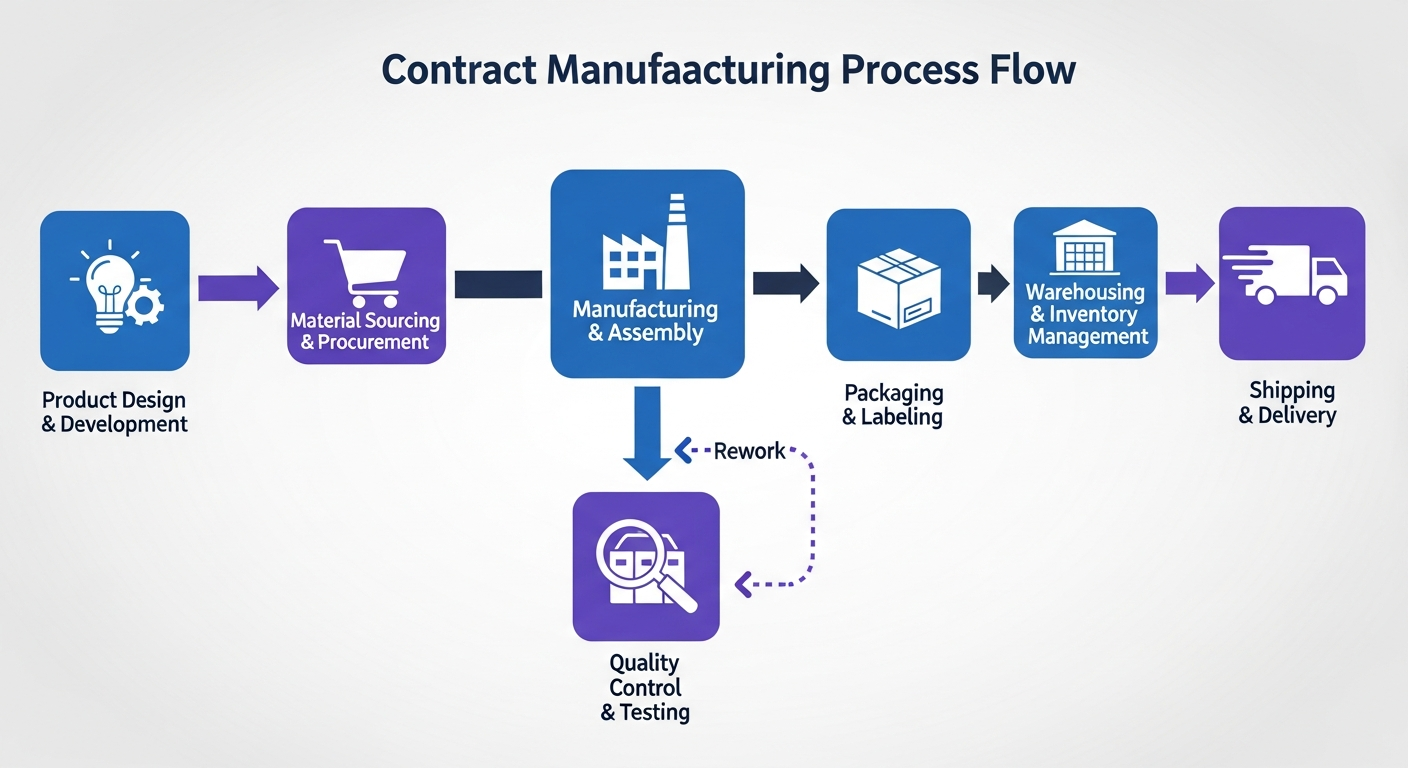
Advantages of Contract Manufacturing
- Lower investment costs
- Faster time-to-market
- Flexible production capacity
- Access to specialized expertise and equipment
- Focus on core competencies
Disadvantages of Contract Manufacturing
- Quality control challenges
- Limited process control
- Supplier dependency risk
- Intellectual property concerns
Learn more about the advantages and disadvantages of contract manufacturing, or explore the step-by-step manufacturing processes.